Addressing offensive terminology in our catalogue
8 Apr 2026 11:41 AM
The National Archives’ catalogue is continuously updated and improved. As part of this work, colleagues are addressing offensive terminology within catalogue descriptions. This blog discusses how we're doing this to make sure the catalogue is accurate, accessible and helpful to archive users.
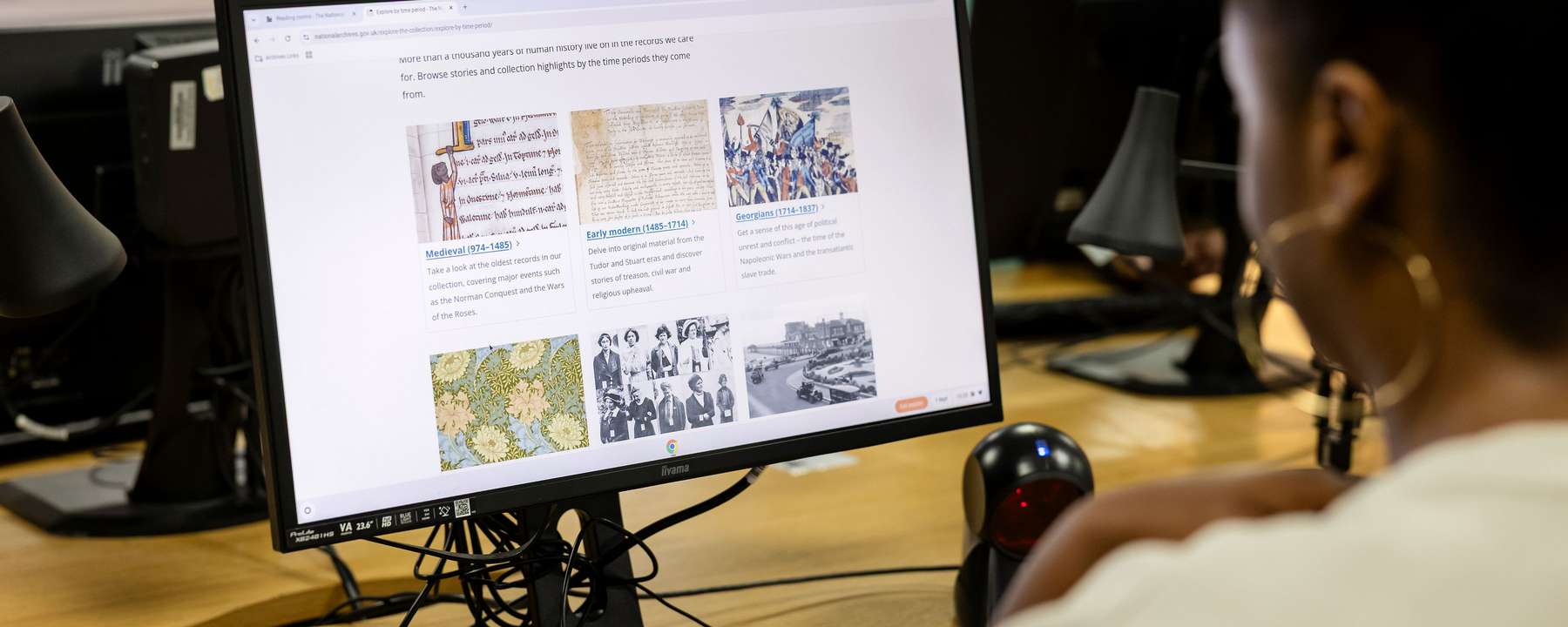
The National Archives' catalogue, Discovery, holds more than 37 million descriptions of records held by The National Archives and more than 3,500 archives across the country.
It reflects many years of work by hundreds – if not thousands – of people. As a team, we are constantly adding to and improving its content.
The collection
Catalogue Week 2025

Explore a small selection of our cataloguing activity from 2025.
Underpinning our cataloguing work is the desire to be true to the past, helpful in the present and sustainable for the future. This is not always an easy task.
One area we are working to improve is how we treat historic offensive terminology within catalogue descriptions. Archives spanning a thousand years inevitably contain language that reflects the attitudes and biases of their time – in our case often the perspective and biases of the state. Past generations of cataloguers often perpetuated such attitudes by repeating offensive or pejorative words from the original sources.
The presence of such words in the catalogue can serve to reflect the historical realities documented within the archives. Additionally, researchers looking into marginalised histories and challenging or uncomfortable topics can find past terminology useful for locating relevant material. If we use substitute terms in our catalogue, this may make it harder for users to research ‘hidden histories’ in our collections.
Nevertheless, users have told us that encountering offensive terms within the catalogue can be jarring or upsetting, especially when lacking context or qualification. It can be especially problematic where cataloguers from past decades used language that was not contemporary to the original record or acceptable today usage. Such descriptions are neither accurate nor helpful from today's standpoint.
The National Archives is not alone in considering how to address this language. For example, Archives Wales carried out a project to review and revise archival descriptions. Of course, not all archives have taken the same approach, and some have revisited past descriptions more thoroughly than others.
Discovery includes a lot of information about other UK archives' collections as well as our own. Users may notice variation across Discovery due to the different approaches used by other archives.
Click here for the full press release