Allies Should Unite on Defence Finance
30 Jul 2026 01:11 PM
NATO Allies should come together to form a defence financing instrument that supplements national defence spending, improves companies’ access to affordable capital, and incentivises joint procurement.
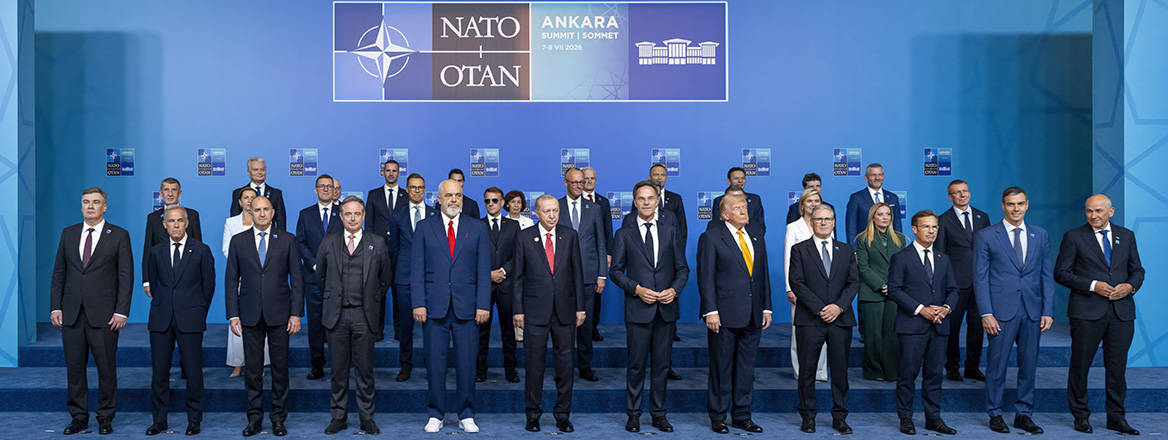
The UK’s then Prime Minister, Sir Keir Starmer, narrowly managed to save face when meeting his colleagues at this year’s NATO Summit in Ankara. Behind him lay several weeks of fierce political debate about the direction and ambition of the UK’s Defence Investment Plan (DIP), which sets out the government’s defence investment priorities and budget for the coming years. The compromise result promises an increase of circa £15 billion but falls significantly short of the £28 billion in additional investment the UK’s Strategic Defence Review assessed as necessary. While most NATO countries need more money for defence, finding the money is difficult, particularly for Allies with limited fiscal headroom or scope to cut spending in other areas of government. As such, politicians across Europe and in Canada are looking for creative ways to finance the promised significant, long-term increases in defence spending while not upsetting the public with higher taxes, increased debt, or more guns-vs-butter trade-offs.
One solution is common borrowing, which can enable countries to borrow money at lower interest rates and on more favourable repayment terms.
The EU’s Security Action for Europe (SAFE) programme is one such mechanism, allowing EU members to borrow money through the EU, as long as they procure a capability with at least one other EU nation. Unfortunately, the instrument is limited in scope and duration ((€150 billion until 2027) for now, and many EU member states can borrow at more favourable national rates. Also, as SAFE is not equally accessible to non-EU Allies (for instance, because at least 65% of component costs must originate from within the EU), it can disrupt cross-border supply chains and prevent nations from procuring the best equipment.
To address these challenges, the UK, together with the Netherlands, Finland and Poland, proposed the Multilateral Defence Mechanism (MDM) at the NATO Summit in Ankara. Based on the few details publicly available, the MDM aims “to lend to members for joint procurement, stockpiling on members' behalf, and supply chain finance”. Its proponents claim that cheaper lending may be unlocked by aggregating demand among MDM members through multi-year procurements or joint stockpiling of equipment, which could be used as security for borrowing. The latter would be particularly attractive as it keeps debt off national balance sheets, with the initial liability being held by the MDM. The idea is that countries can draw down from the stockpiles as and when needed, turning what was once an upfront capital expenditure into an operating cost down the road. And MDM may also have a mandate to fund early-stage R&D cooperation among Allies. The hope is that connecting states’ access to cheaper borrowing with joint procurement and pooled R&D will encourage them to work together rather than go it alone. The UK’s DIP allocates £400 million to the MDM.
However, some experts doubt that the idea to leverage stockpiles facilitates cheaper borrowing. Munition stockpiles have a very limited market and are, therefore, highly illiquid. They also cost money to maintain, as they require secure infrastructure facilities, insurance, and, at the end of their shelf live, they produce disposal costs if not used. Unless states commit to buying a set share of stockpiles in advance (which would put these costs back on their balance sheets), a mechanism with these commitments may have difficulty to attract the AAA rating required to facilitate low-cost borrowing.
Click here for the full press release