Europe Started Talking Nuclear Deterrence. Still Missing: A Plan
7 Sep 2026 12:53 PM
Europe's nuclear future prominently on the agenda. But talk is cheap, even of grand designs, and the debate lacks an understanding of joint responses or near-term steps.
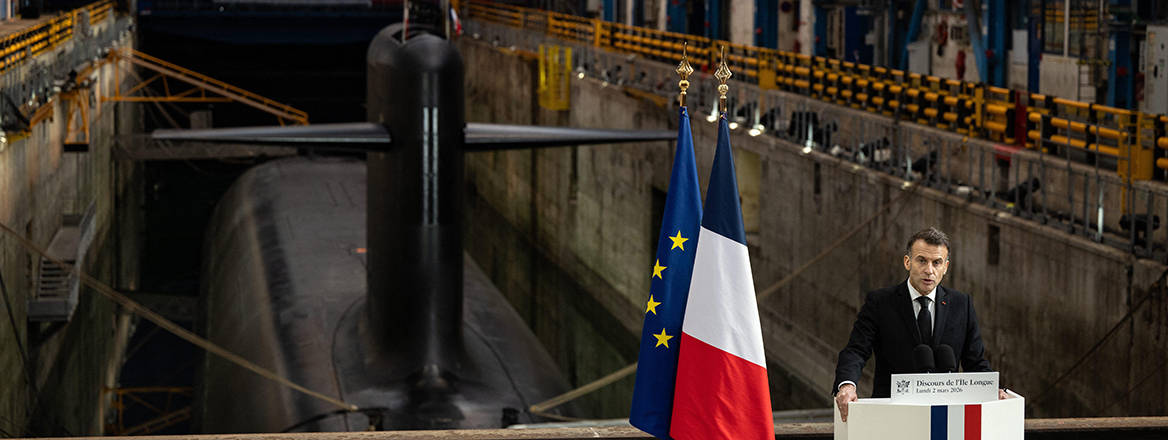
For the very first time, German troops will take part in a French nuclear exercise this year. While such a participation sounds technical, it is not. Rather, Germany’s decision to take part in a French nuclear manoeuvre is of high political relevance and the latest move in a series of decisions and announcements touching upon Europe’s nuclear future.
Correspondingly, French President Macron unveiled his concept of ‘forward deterrence’ earlier this year, according to which France would offer its allies the opportunity to contribute their conventional forces to France’s nuclear activities and open the possibility of deploying France’s nuclear-capable aircraft, temporarily, on the soil of its allies.
In addition, French and German governments have established a framework in which to further their nuclear cooperation: a German-French Nuclear Steering Group, co-chaired by the French President and Germany’s Chancellor. Nine other European countries, including Belgium, the Netherlands, Poland and the UK, are, apparently, also engaged in structured talks with France about its ‘forward deterrence’ proposal.
Hence, it is fair to say that political momentum surrounding Europe’s nuclear future is real – and for good reason, since Russia has decreased its threshold for nuclear use and repeatedly fired nuclear-capable missiles at Ukraine. These steps on the part of Moscow seem to aim at exerting political pressure on NATO allies, first and foremost, rather than representing a military necessity. Concurrently, Washington’s plans to reduce its conventional contributions to Europe’s deterrence posture, though formally separate from its nuclear guarantees, undermine the trust those promises rest on. Both developments – Russia’s intensified nuclear signalling efforts and American retrenchment trends – reinforce each other, casting doubt on the potency of Europe’s nuclear deterrence arrangements. A Kremlin that sees a waning US commitment to Europe’s security has every incentive to continue testing where NATO’s red lines are and, if overstepped, whether and how the Alliance reacts.
Click here for the full press release