From PCs to Prompts: The Next Great Workplace Shift
16 Jan 2026 12:03 PM
In the 1980s, computer literacy was a differentiator between those who could participate in the modern workplace and those who could not. Today, AI fluency is emerging as that same defining baseline skill, reshaping who gets access to opportunity and who is left behind.
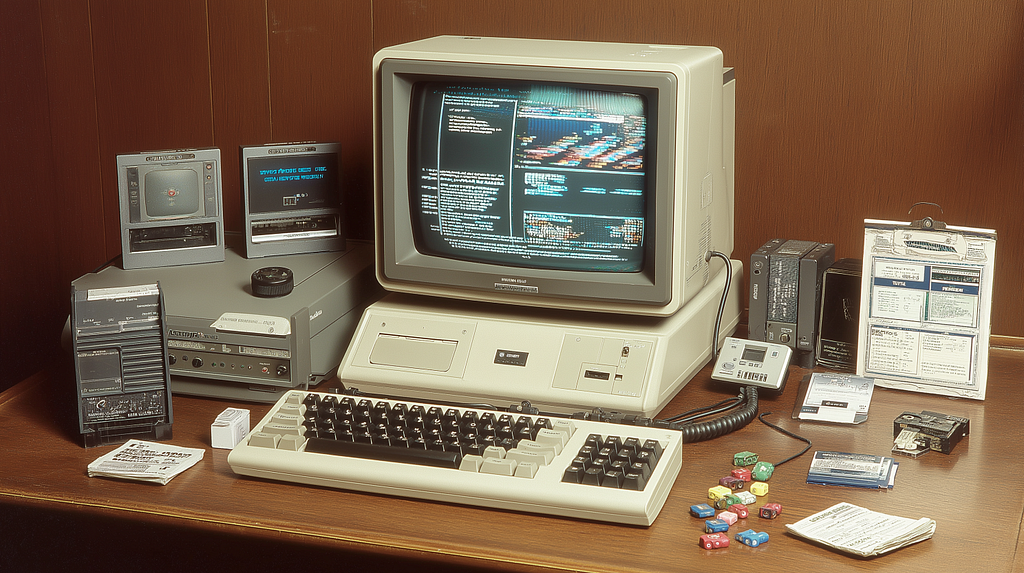
On August 12, 1981, IBM unveiled the PC 5150 at the Waldorf Astoria in New York. At $1,565, it was revolutionary — a computer small enough to fit on a desk, affordable enough for businesses and eventually homes. The IBM PC fundamentally changed how we work, communicate, and organise our lives.
Today, we’re watching history repeat itself with artificial intelligence, and the parallels are striking enough that we should pay attention. AI is doing to knowledge work what the personal computer did to office work in the 1980s. The evidence is overwhelming that AI fluency has become what computer literacy was for previous generations: a baseline skill that determines who gets left behind and who moves forward.
The Pattern is Repeating Itself in 2026
The parallel between computer literacy then and AI fluency now isn’t just a convenient metaphor. It’s playing out in measurable ways across education systems, workplaces, and hiring practices worldwide. Research from institutions like the Brookings Institution and the Tony Blair Institute for Global Change shows that AI literacy is rapidly becoming a “passport to employability”.
For the majority of us reading this, it is hard to imagine a workplace without the use of computers. Emails, Slack Messages and Zoom Meetings are how we have been working for almost 2 decades now. Those who thrived in this transition weren’t necessarily the ones who could write code or rebuild a hard drive. They were the professionals who recognised that computers were tools to amplify their existing capabilities.
A skilled writer became more productive with word processing. A thoughtful analyst could explore more scenarios with spreadsheets. A creative designer gained new ways to bring ideas to life with early graphics programs.
The same dynamic is unfolding with AI right now. The winners in this transformation won’t be those who understand neural networks or can explain transformer architectures. Instead, success will belong to people who recognise AI as a powerful amplifier of human capability and who develop fluency in directing these tools toward meaningful outcomes.
AI skills are appearing in far more job listings across industries, not just in technical roles. Employers increasingly assume that candidates can safely and productively use AI tools as part of their standard workflow. A global survey of five thousand Gen Z workers by EY found that while most young people are using AI tools, they lack the deeper critical skills needed to use them effectively. This creates a concerning gap between surface-level familiarity and genuine fluency, one that educators and employers are racing to close.
What Fluency Means in the Age of AI
Being AI fluent doesn’t mean becoming a programmer or data scientist, just as computer literacy never required you to become an IT professional. Instead, it means understanding what AI can and cannot do, knowing when to apply it, and developing the skill to guide it effectively. It means learning to prompt thoughtfully, to verify outputs critically, and to integrate AI-generated work into your broader professional judgment.
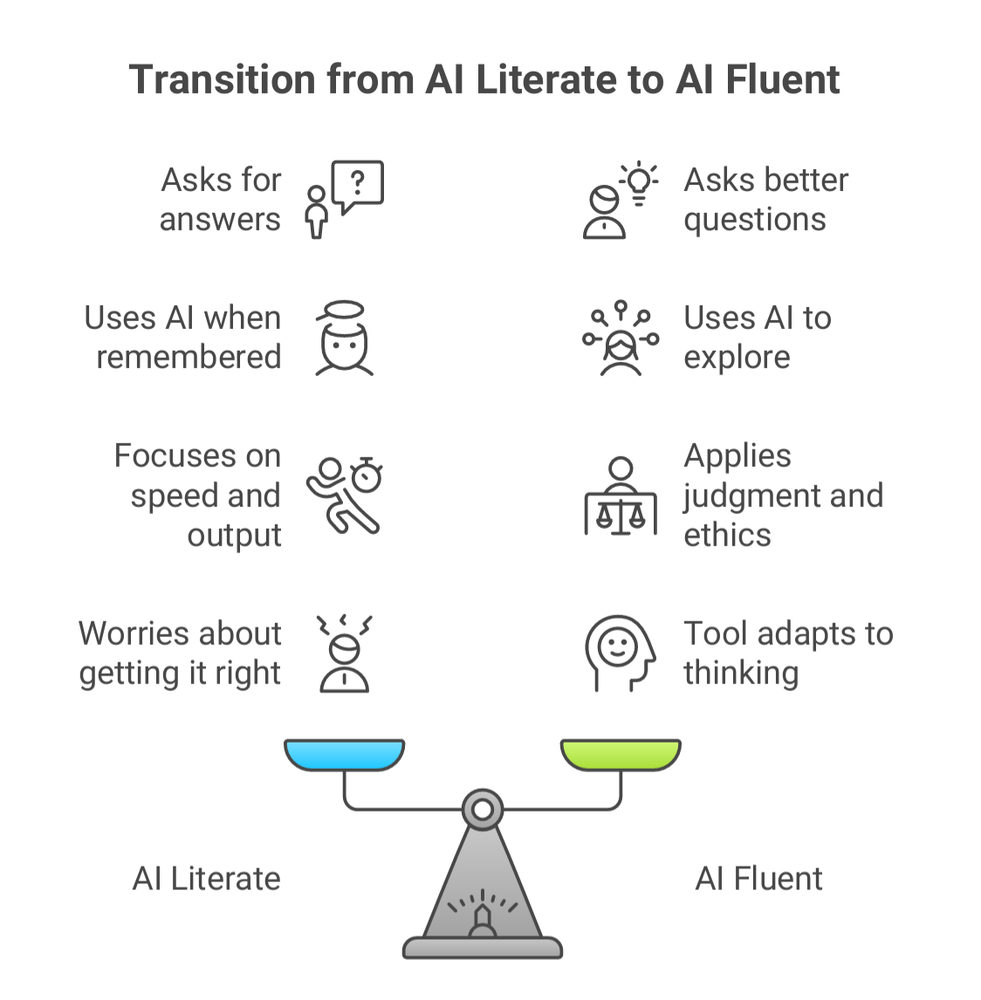
Many can open ChatGPT or use AI-powered tools, but they struggle with crafting effective prompts, evaluating the accuracy of outputs, and understanding the risks and limitations inherent in AI systems. True fluency means knowing not just how to get an answer from an AI platform, but how to question that answer, refine it, and integrate it responsibly into your work. It means understanding concepts like algorithmic bias, data privacy, and the boundaries of what AI can reliably do.
This elevated standard exists for good reason. Unlike the IBM PC, which simply processed the information you fed into it, AI systems actively shape, filter, and sometimes distort information. AI fluency has become essential protection against misinformation and manipulation.
Around the world, more is being done to embed these tools and mindset. The UK government is launching a new curriculum that will help primary-aged children gain skills like how to spot fake news and identify misinformation and disinformation. Universities like Ohio State are responding by implementing campus-wide AI fluency initiatives designed to give every graduate, regardless of their major, the skills to apply AI thoughtfully within their chosen field.
Those who understand how AI works can spot AI-generated disinformation, question algorithmic decisions that affect their lives, and demand accountability from institutions deploying these systems. Making it not just a workplace skill but a requirement for democratic participation in an age where AI mediates the information flows that shape public opinion.
The Human Skills Still Matter
Perhaps we can learn from the past a bit here. Even as we acknowledge the urgency of developing AI fluency, the most important lesson from the computer revolution still holds true. The people who succeeded most dramatically in the computer era weren’t those who focused purely on technical mastery. They were professionals who paired technological fluency with deeply developed human capabilities.
Strong communicators became even more effective when they could iterate on writing quickly with word processors, but their success came from their understanding of audience, tone, and persuasive structure. Strategic thinkers could model more scenarios with spreadsheets, but their value came from knowing which questions to ask and how to interpret what the numbers meant.
The exact same principle applies to AI. The technology can draft initial versions of almost anything, analyse patterns in vast datasets, and generate options you might never have considered. However, the humans who will thrive are those who bring strong judgment about what’s actually good, clear thinking about what problems are worth solving, creativity in how to apply these tools, and wisdom about ethical implications and human impact.
The goal is to develop AI fluency as an additional layer on top of the communication skills, critical thinking, creativity, and ethical reasoning that have always separated truly successful people from the rest.
Invest in What Matters
Policy makers from the Brookings Institution warn that without this foundation in AI literacy, we’ll see a widening of social divides similar to the digital divide that disadvantaged those who missed the first computer revolution.
Those without AI literacy face greater vulnerability to fraud, disinformation, and unfair automated decisions. The consequences of being left behind are real and growing more severe as AI systems take on more decision-making roles in employment, housing, credit, and education.
The encouraging news is that the path forward builds on rather than replaces what makes us human. Success with AI comes from maintaining the human creativity, judgment, and ethical reasoning that no algorithm can replicate.
The Choice Ahead
Every generation faces a moment when new tools reshape the landscape of work and opportunity. Our moment has arrived. The question isn’t whether to engage with AI but how to engage with it while remaining fully human. Those who develop fluency while doubling down on their human capabilities will find themselves in the same position as those who embraced computers while maintaining their core professional skills: not replaced by technology, but empowered by it.
The most successful people have always been those who saw new tools as amplifiers of human capability rather than replacements for it. That hasn’t changed. It never will.
From PCs to Prompts: The Next Great Workplace Shift was originally published in Breakthrough Social Enterprise on Medium, where people are continuing the conversation by highlighting and responding to this story.