From Tailored Air Group to Tailorable Maritime Aviation
2 Sep 2026 02:37 PM
While the Royal Navy's Hybrid Air Wing is often discussed in terms of platforms and technology, its longer-term significance may be to expand the options available to maritime commanders.
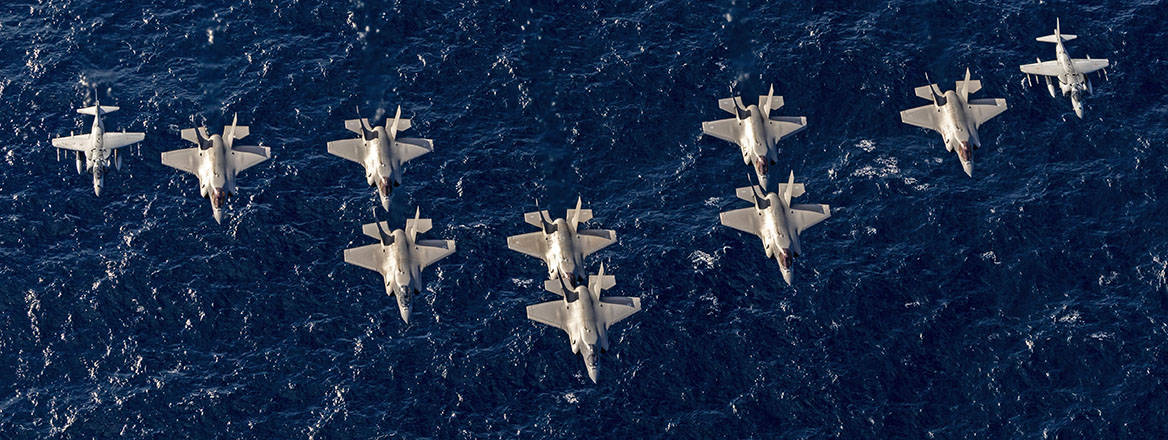
The Royal Navy’s Hybrid Air Wing concept is moving from proposition to practice. Proteus has flown, Operation Highmast demonstrated an autonomous logistics sortie between ships, and Exercise Dragon Rider connected crewed and uncrewed aviation systems over extended communications ranges. Alongside projects such as Pantheon and Vanquish, these activities mark progress towards maritime aviation operations in which crewed and uncrewed systems operate as an integrated force.
The significance extends beyond increasing platform numbers or mass. A naval task group can be redirected rapidly, but its embarked aviation is largely selected before sailing, shaped by anticipated tasks and operating environment. Changing its composition at sea is challenging, particularly at range, in contested environments, when assets are committed elsewhere, or when established logistics hubs prove unavailable. As the Royal Navy balances demands across multiple regions, hybridisation may move some decisions about force composition and employment closer to operational need.
This commentary explores which decisions might move downstream and what must still be prepared beforehand. The starting point for this evolution is not a blank sheet, but the Royal Navy’s existing Tailored Air Group (TAG) model.
Click here for the full press release