Instrumentalised Migration and Russia’s ‘Disposable Agents’
7 Aug 2026 12:09 PM
Instrumentalised migration and Russia’s recruitment of disposable agents exploit the same European weakness: treating deniable acts of coercion as isolated rather than as elements of a wider campaign.
Europe’s latest migration emergency is unfolding in Ceuta. In late July, around 60,000 people, most of them Moroccans, crossed into the small Spanish territory in the largest surge in its recent history. The influx overwhelmed local services, prompted a Spanish military deployment and rapidly developed into a wider European political controversy.
The immediate causes remain contested. Spanish and Moroccan officials have pointed to smuggling networks and misleading social media claims about a recent Spanish court ruling. Analysts have also questioned whether Moroccan authorities initially turned a blind eye to the crossings, although claims that the latest surge was deliberately orchestrated remain unsubstantiated.
There is insufficient evidence to describe the latest events in Ceuta as an act of state-directed instrumentalised migration. Yet the crisis demonstrates how rapidly a concentrated migration flow can become a major political issue for the EU: it has overwhelmed border and reception systems, forced difficult legal and humanitarian choices, and generated consequences beyond the state directly affected./span>
Italy’s temporary reintroduction of checks on arrivals from Spain illustrates how pressure at one external border can lead to internal controls and strain the principle of border-free travel. This wider disruption explains why migration can provide such a powerful lever for malign actors. A state able to facilitate or direct a sudden movement of people can not only burden frontline authorities, but also provoke disputes between European governments and strain solidarity among member states.
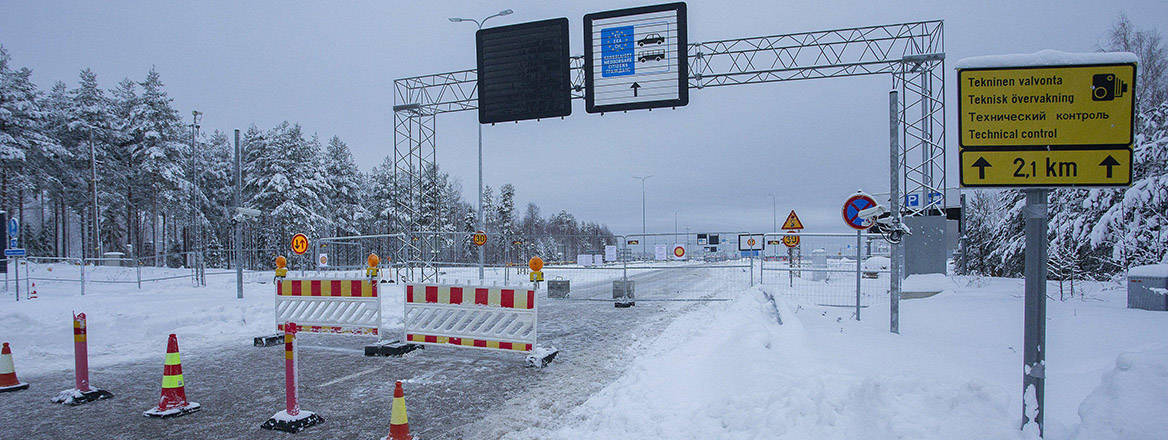
Russia and Belarus have repeatedly sought to exploit precisely this vulnerability. On Russia’s northern borders in 2015–16, at the EU’s frontier with Belarus in 2021, and on the Russian–Finnish border in 2023–24, migration flows were facilitated and directed in ways intended to impose political, administrative and economic costs while keeping the sponsoring state at a distance.
Instrumentalised migration should not, however, be viewed as an isolated border tactic. It shares an operational architecture with Russia’s growing use of ‘disposable agents’ to conduct sabotage and disruption: state direction or enablement at a distance, reliance on civilian or criminal intermediaries and the deliberate preservation of ambiguity.
Click here for the full press release