Iraq’s water crisis: Dammed by neighbours, failed by leaders
14 Aug 2025 12:24 PM
EXPERT COMMENT
Scarcity of water is not only a national crisis for Iraq, but a growing driver of internal tension.
While wars dominate headlines elsewhere in the region, Iraqis are battling a quieter but equally destabilising crisis. Climate change is drying rivers, upstream neighbours are cutting water flows, and the leaders of the country historically known as the ‘Land of the Two Rivers’ have failed to manage its most vital resource.
This water scarcity is not only a national crisis but a growing driver of internal tension, fuelling displacement, deepening rural poverty, triggering major public health problems, and stoking unrest in already fragile communities.
Iraq is facing its lowest water reserves in over 80 years, dropping from approximately 18 billion cubic meters last year to around 10 billion today. The impacts are visible across the country in different but equally damaging ways. In Dhi Qar along the southern Euphrates, more than 10,000 families have been displaced because of shrinking rivers and drying marshes.
In Basra, rising salinity and pollution due to water scarcity are triggering a surge in water-related illnesses. In different cities across Iraq, residents are protesting lack of water and demanding solutions, as some have been without water for more than a month. The crisis has also impacted the country’s food security, with the minister of water resources announcing in summer 2025 the suspension of September farming plans, including wheat cultivation, due to severe water shortages.
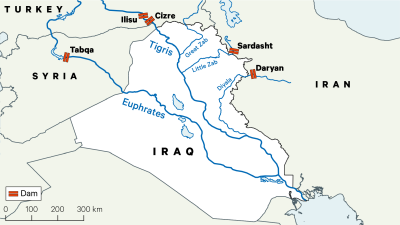
The Euphrates and Tigris rivers in Iraq with major dams in nearby countries. Sources: World Bank, Natural Earth, Geohack.
Click here to continue reading the full version of this Expert Comment on the Chatham House website.