Menopause at work: Changing the conversation
23 Feb 2026 12:13 PM
Blog posted by: Catherine Chan, Senior Principal, Stakeholders and Insight, Equality and Human Rights Commission, 20 February 2026.
The Equality and Human Rights Commission has got people talking about a previously taboo topic.
The Equality and Human Rights Commission is Britain’s equality and human rights regulator. An important part of our role is publishing guidance so employers understand how to comply with equality laws and workers know their rights.
Millions of working women experience menopausal and perimenopausal symptoms. However, it’s only in recent times that we have started to talk more openly about “the change” at work.
This is a positive step as one in 10 menopausal women left the workforce because of their symptoms. Many employers have also been unaware or unclear of their legal obligations, increasing the risk of discrimination or harassment on the grounds of sex, age and disability.
Our menopause in the workplace guidance attracted widespread attention from stakeholders, media and the general public. Here are five factors that contributed to its success:
Securing stakeholder buy-in
The project team set up a reference group with eight stakeholders from various organisations. This was a vital source of insight and input, and helped to improve the quality of the guidance. As stakeholders were brought into the process, they helped to promote the final guidance to relevant audiences.
Creating excellent content
As a team, we used our writing and editing skills to produce guidance that is clear, concise and easy to understand. We developed three explainer videos to bring the issue to life. The topics were chosen to appeal to employers, and we kept the length of each video to 2 to 3 minutes to retain viewers and increase shareability. These have been our most successful videos in recent years, with nearly 29,000 views.
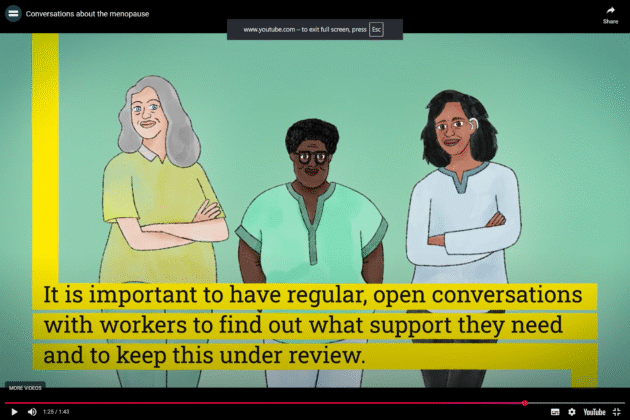
The EHRC published short, accessible explainer videos to bring attention to menopause in the workplace guidance.
Going to our target audiences
The team promoted the guidance widely – it was just as important to secure coverage on ‘Loose Women’ and in women’s HR and business titles, as it was to get on Radio 4’s ‘Today’ programme.
We conducted desk research to find organisations and influencers who have campaigned for greater menopause awareness and asked them to share the guidance with their members/followers. It was great that our first phone call was to an organisation that said: “We’ve just seen it on the news – our members will definitely want to see this guidance.”
Re-promoting our work
Like many teams, we tend to move on quickly after a launch. We have been more diligent in re-promoting the guidance and videos throughout the year on LinkedIn, X and with the Government Communications community. This blog is another example of re-promotion! It’s worth remembering that not everyone sees your work the first, second or even third time around – re-promoting ‘old’ projects can reach new audiences.
Learning by doing
We have a positive culture of evaluating and learning from our work. In this case, the performance of previous projects informed the style, content and length of the guidance and videos. As we work to produce our impact report, we will continue to take forward lessons from this project to reach relevant audiences and maximise our impact as a regulator.
Acknowledgment: this was a cross-organisation project involving Communications, Policy and Compliance colleagues.