The Big Future: Speaking to Children in Scunthorpe
1 Oct 2026 01:30 PM
This week, I went to a place that, for many years, was home.
I grew up in Scunthorpe. It is where my family – in the words of It’s A Wonderful Life – did their working and paying and living and dying. It is where my father became a skilled pipefitter at the steelworks, after his father had worked as a steelworker. It is where I went to school, to mass, to college. It is the port that I pushed out from into my life.
Home is something that children care deeply about. It looms large in the thoughts of children and young people. What their home looks like, our national failing to build enough housing so that they might one day be able to buy one – these are things children tell me about all the time.
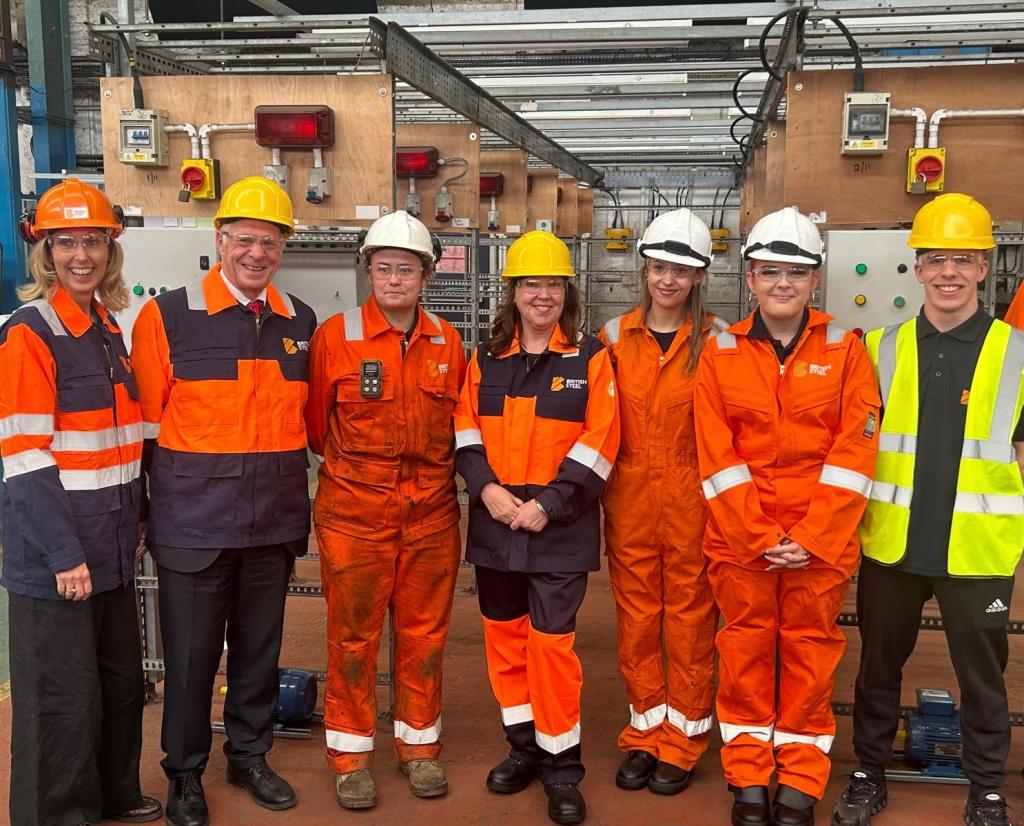
Meeting young apprentices at British Steel
My statutory duty is, amongst other things, focused on children living away from home. I look at what happens to children who move, who live in homes that are not fit for purpose, or who live in some form of children’s home for a variety of reasons. This makes defining home more difficult. I see so often all the forms it can take.
But in short, I think it is this: home should be somewhere where you are loved. It should be the place that you feel important, and that you matter.
I went to visit, for the first time, the steelworks that the men of my family worked and trained in. It is now run by British Steel, recently nationalised, and has taken on apprentices, followed by graduates, and I had visited to speak to them.
They were a credit to themselves, to British Steel, and to Scunthorpe – mature, reflective, generous with their time and their insight. I began with a group discussion, where I asked what they wanted from their future.
The young apprentices reflected on how happy they were to be an apprentice. They spoke about how they felt they made their families proud, how they were happy to be earning, how they felt they had the respect of their friends and peers.
One of the girls told me about the camaraderie of the group: ‘Look, it’s gonna be male dominated. It is what it is. But the lads treat me no different… the big thing is, we’re all getting through the apprenticeship together. We all want everyone to get to the site.’
Another apprentice said how they were glad to be there, but made it clear to me that work experience needed sorting out. He was very interested in working with his hands when he was younger, he was a bright young man, but his work experience had ultimately been a box ticking exercise rather than any attempt to connect him to the labour market: ‘They just put me in Morrisons’ he said.
And then one young man said something I didn’t initially understand. He said to me that ‘I just want to be important’.
As I toured the steelworks, speaking to young apprentices and workers, I brought what this boy had said up with a brilliant 19 year old apprentice, to see what she made of it. Did he mean he wanted to make money? Was it about the strategic importance of steelmaking? It wasn’t.
She explained it to my staff:
‘It’s like this’ she said. ‘There’s two old boys I’m working with at the minute. And I’ve just got these two young girls in now. So when those men retire, who does their job? Who knows how? It’ll be me. I’ve learned everything I can from those two old boys, and I’m still learning. And one day I’ll be the person people need, who knows what to do. And I’ll teach the young ones.’
I don’t think she noticed, but later on, I watched her with the new apprentices. She was looking after those two girls already – adjusting helmets, answering a question or two, checking if they were getting on well with the work.
19, and already a leader. Already deeply important.
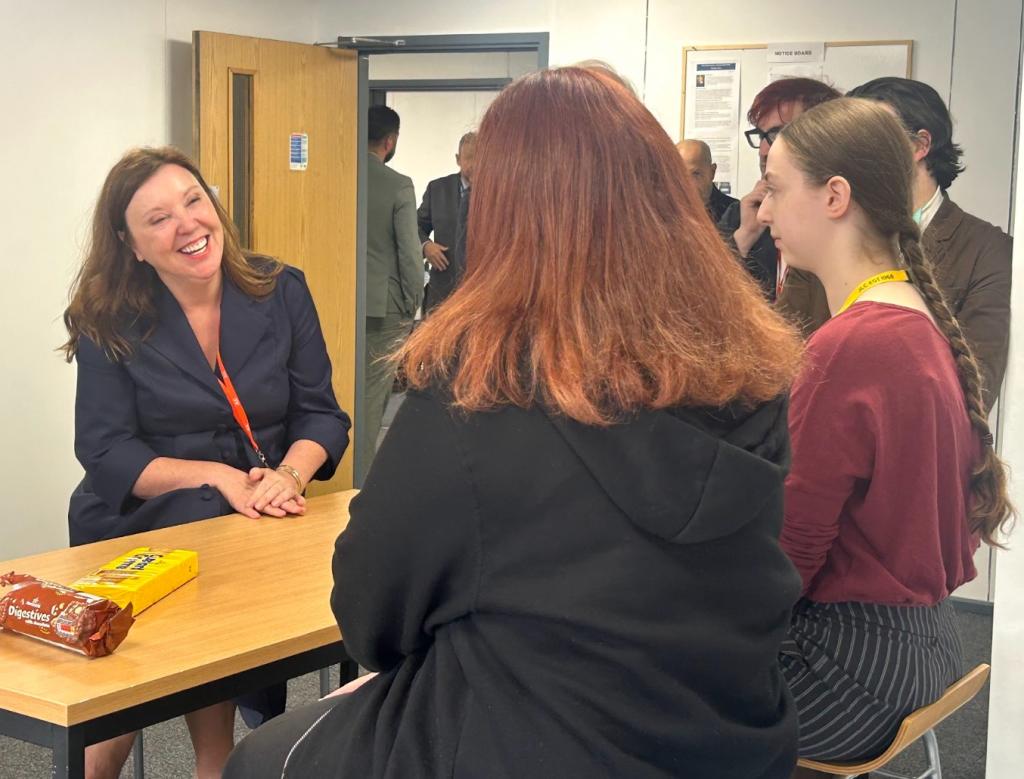
Meeting students at John Leggott College
This is what good work looks like for England’s young people. It is easy, when we talk about good work, to say that it is somehow purely the preserve of the manufacturing industry. And perhaps that embodied act of making things helps. But what matters, more than that, is feeling that you are part of something bigger, contributing to something more important than yourself, and learning things that make you, in some way – small or large – valuable. Importance isn’t about being CEO of British Steel, but rather about being the worker people turn to when something goes wrong. There is real value in that.
But you only get to that point by trial and error. I think that the apprentices that I spoke to today will go so far, but I don’t think that any one of them was born with some preternatural ability to be a good engineer, or with some innate ability to weld. They got there because employers were willing and able to take chances on them, willing and able to train them, and willing and able to assume the responsibility and the risk of young, new, workers – knowing that they will make mistakes.
It is why this visit to Scunthorpe was so heartening.
Yes, it is nice to return to where I grew up, and genuinely wonderful to hear from apprentices, and know that that next generation of steelworkers are coming through. But a major concern of mine as I speak to children across the country as part of my survey The Big Future has been the sense that they feel so deeply precarious; seemingly convinced that one mistake will doom them. As I have written previously, they have told me that in their view, this is part of the difficulties that many are having transitioning into the labour market – checking out to avoid the agony of choice.
My concerns here remain. But they have been allayed somewhat by my visit to John Leggott College.
There, I saw stories of change – the exact kind of change that many worried children have told me that they worry is impossible.
I saw their pioneering work with electively home educated children, working with EHE children and families across the region to provide spaces for tutoring and exam spaces (an issue I hear about often) for those for whom EHE was the desired outcome, and also supporting children and their families who want to return to education, and providing them with what they need and did not originally get from the school system so that the children feel confident enough to return.
I listened to a group – a mixed group of students and apprentices – and heard about how many of them had changed careers. One young woman had been to the college, then to university, hadn’t liked it, decided to become a prisons officer, where she had realised that a hands-on role wasn’t what she wanted, and is now training to do more administrative work. She found she really quite liked paperwork after all!
The college was doing remarkable work with their current pupils. All of them told me about the strong guidance they were receiving from the college about their future. One had been able to work out exactly what she wanted to do with her life via a foreign trip subsidised by the Newton Fund. Another was supported towards her dream of veterinary work via a ‘MVD Club’ – a medicine, veterinary, and dentistry support club. A third told me that the most important thing was something that should have been wildly obvious – that for the first time, an educational institution was telling them what qualifications matched to their chosen career. Quite how she’d managed to get to college without that happening was a chastening thought.
The local MP, Sir Nic Dakin, joined us. He was a part of my story in Scunthorpe. When I attended John Leggott, he was my English teacher. He went on to lead that college, and I too pursued a career in education. For us to return as PPS to the Prime Minister and Children’s Commissioner respectively was, I hope, a small part of the fantastic work that John Leggott is doing to show that there is no limit to what boys and girls from Scunthorpe can achieve.
And so I left Scunthorpe happier than I was when I came. British Steel is offering high quality work and training. John Leggott College is doing its utmost to provide the young people of Scunthorpe with a high quality education. Between them, they are delivering the knowledge and the opportunity that children need so that they can enter the world and make their way, and make themselves at home in the world.