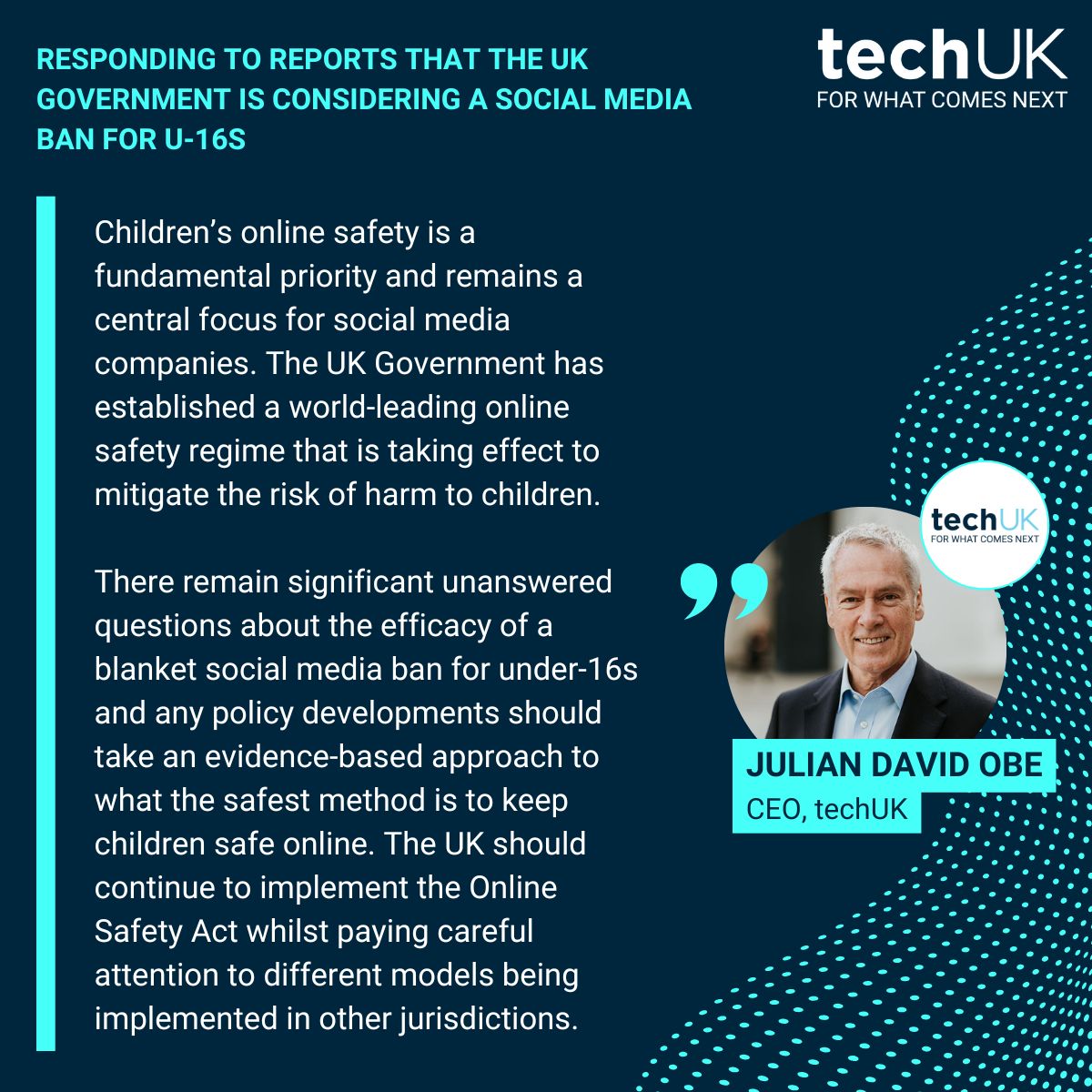
Under 16s Social Media Ban: A premature discussion?
16 Jan 2026 04:04 PM
The UK’s conversation on children’s online safety has reached a critical moment. As political attention turns once again to proposals for a blanket ban on social media use for under-16s, it is vital that policy decisions are guided by evidence, not popularity.
There is an overwhelming consensus against a ban from researcher, academia, civil society and young people, against a blanket ban. While such bans may appear decisive, they risk being ineffective in practice and harmful in outcome. Protecting young people online is a fundamental priority, but a one-size-fits-all prohibition is unlikely to deliver meaningful safety improvements. Experience from Australia already highlights significant challenges, including enforcement difficulties, widespread circumvention, and unintended consequences for children’s social, educational, and economic development.
Social media is not simply a leisure activity for young people. It plays an important role in peer connection, creativity, learning, and exploration, particularly for those who may be isolated or marginalised offline. Any policy that restricts access must carefully weigh these benefits alongside potential risks
Why techUK Opposes a Blanket Ban
Social media platforms are often portrayed purely as sources of risk, but this overlooks their significant social, educational, and economic value. For many young people, these platforms are integral to social development, learning, creativity, and opportunity. Any policy that restricts access must carefully balance potential risks with what young people stand to lose.
Importantly, many technology companies are already taking substantial steps to improve online safety. Significant investment is being made in safety features, privacy-preserving technologies, age-appropriate design, and age verification, particularly under the UK’s Online Safety Act (OSA). Policy should build on this progress, not constrain it. Rather than backing a prohibition on under-16s using social media, we support:
- Ensuring regulation works in practice and can be effectively enforced. Early evidence from Australia suggests its model is technically impractical.
- Supporting industry-led solutions that protect children without unintended consequences.
- Preserving innovation, parental choice, digital education, and accountability.
- Encouraging constructive engagement between policymakers and industry to raise standards for safe, age-appropriate online experiences, instead of imposing blunt bans that are likely to be circumvented.
The UK’s Legal Framework vs Australia’s
The UK Government and Parliament have put in place a world leading online safety regime that is being implemented by Ofcom. The Online Safety Act places enforceable duties on platforms to protect children through risk assessments, content moderation, age-appropriate design, and age assurance. The OSA this week has proven to work, and it should be given time to mature.
Australia’s approach, by contrast, is relatively new and untested. Introducing a similar blanket ban in the UK now risks undermining the OSA before it has had time maturing, weakening both child safety and innovation.
Blanket bans for under-16s are unlikely to deliver meaningful safety improvements and risk unintended harms, such as migration to less regulated or encrypted platforms, reduced opportunities for early digital literacy, and increased generational inequality.
The Practical Problems With a Ban
A blanket ban raises several serious concerns including:
- Children’s rights and inclusion: International frameworks recognise young people’s rights to expression, information, and participation in social and cultural life. Broad restrictions risk undermining these rights and increasing digital exclusion.
- Enforcement challenges: Strict age verification can be easily bypassed through VPNs, proxies, or adult-created accounts.
- Migration to riskier spaces: A ban could push young people towards unregulated platforms or encrypted and dark web spaces with far weaker safety protections.
- Limited evidence of effectiveness: Research shows that the relationship between social media and mental health is complex and varies widely. Most young people report neutral or positive experiences, including social connection and peer support.
- Missed opportunities for education: Many harms are better addressed through digital literacy, parental engagement, safe-by-design services, and robust enforcement of existing rules.
- Undermining existing features: Removing young people from regulated platforms could undermine these protections and reduce parental oversight.
What Young People Gain From Social Media
Restricting access risks cutting young people off from important benefits:
Social benefits
- Peer connection and community building, especially for isolated or marginalised groups.
- Opportunities for self-expression, creativity, and cultural exchange.
- Mental wellbeing support through shared interests and peer networks.
Educational benefits
- Access to tutorials, educational content, and collaborative learning tools.
- Development of digital literacy, critical thinking, and creative skills.
- Early experimentation with coding, media production, and entrepreneurship.
Economic benefits
- Exposure to career pathways, networking, and internships.
- Support for entrepreneurship and participation in the digital economy.
- Development of workforce-relevant skills such as communication, marketing, and content creation.
A Better Path Forward
techUK advocates for an evidence-led, proportionate, and workable approach to online safety. Policymakers should:
- Identify and address gaps in existing legal frameworks.
- Focus on enforceable safety outcomes rather than broad prohibitions.
- Avoid policies that push minors towards unregulated or opaque services.
- Invest in education, digital resilience, and media literacy alongside regulation.
Conclusion
Protecting children online is a fundamental responsibility, and our members are actively shaping safer digital experiences while tackling the most severe online harms, including NCII. Blanket bans, such as those being debated for under-16s, risk undermining progress already made under the UK’s Online Safety Act, while limiting opportunities for children to develop skills, connect safely with peers, and access educational resources.
Evidence-based, proportionate, and enforceable measures, combined with industry collaboration and education initiatives, offer a more effective and rights-respecting path forward. By investing in technology, safety, and partnerships, our members continue to demonstrate leadership in safeguarding users and creating a safer online environment for everyone.