What’s Left of NATO’s Asia Engagement?
14 Jul 2026 01:50 PM
Shared interests among European and Asian middle powers, navigating a turbulent Sino-American unilateralism, sustain NATO’s Asian partnerships.
NATO developed partnership programs after 1991, when the threat from the Soviet Union evaporated and the alliance was led into activities beyond the foundational mission of collective defence. The first generation of partnerships served NATO enlargement and the stabilisation of post-Soviet Central Asia. A second generation following 9/11 supported missions on counter-piracy and Afghanistan. The current third phase of partnerships reflects a shift of attention toward the rise of China from 2019, producing the ‘Indo-Pacific 4’ (IP4) made up of Australia, Japan, New Zealand and South Korea.
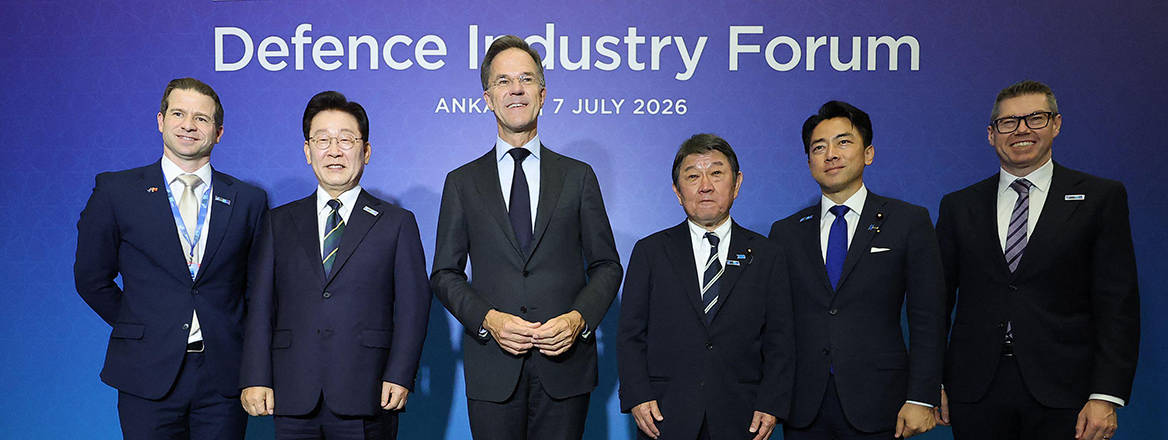
For the 2026 Ankara summit the NATO Secretary General invited the IP4 defense ministers. South Korea was represented at Presidential level, reinforcing the country’s prominence in events centered on defence industry partnership and procurement. Other IP4 members sent ministers of defence, and Japan sent both defence and foreign ministers (PM Takaichi having committed to domestic legislative duties). Compared to the 2022 NATO summit in Madrid with ‘the first-ever participation of the Heads of State and Government of the IP-4 partners in a NATO summit’, and the stronger statement in 2025, this level of representation may be read as an indication of decline. Alternatively, the attendance by defence ministers may be interpreted as a sign that the partnership has matured into a more pragmatic functionality.
Looking back, the IP4 has been challenged from the start due to caution that allies’ bilateral diplomacy with China could be overshadowed by a collective NATO (and therefore US-dominated) stance on China. This ambivalence caused an early proposal to establish a NATO liaison office in Tokyo to whither on the vine. A lack of uniformity in the policies of IP4 members toward China has meant their agenda tended more to other shared interests like countering North Korean nuclear proliferation or mounting a cooperative defence industry response to Russia’s war on Ukraine.
Click here for the full press release