Why Central Asia Focuses so Much on Railways
18 Sep 2025 12:31 PM
Recent events have highlighted the importance of diversifying transport corridors, with railways central in the foreign policy strategy of Russia, China and the West. But it is not without risk.
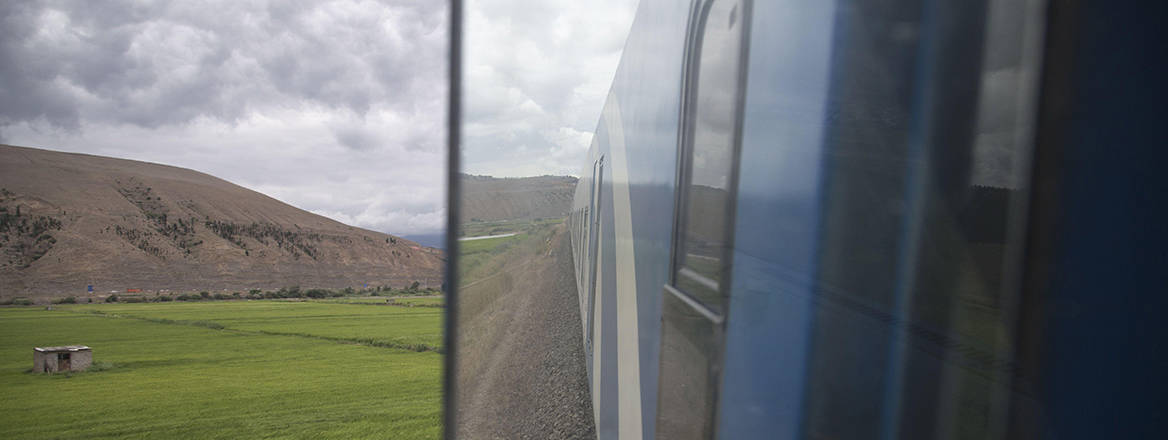
Too much coverage has been given to the ‘great power rivalry’ or ‘competition’ when it comes to understanding the railway drive and the creation of new transport corridors in Central Asia. Yes, Russia and China continue to dominate the rail trade in the region. But does their involvement translate into influence and sweeping access to their own territory and goods? History has shown us that it is not so straightforward.
A Railway Economy
Railways have been the chief means by which both China and Russia have striven to establish special positions in Central Asia. For Russia, the existing Central Asia rail network serves three purposes: a symbol of its Soviet history, a lifeline for sanctions evasion and a geographical re-routing of trade to the East. For China, the railways forms part of the Eurasian land bridge, a key component of the Belt and Road Initiative (BRI). The two largest Chinese railway projects in Central Asia are the China-Kyrgyzstan-Uzbekistan railway and a 272km rail line from Ayagoz in eastern Kazakhstan to Bakhty on the Chinese border.
The tracks laid are components of several larger transport corridor projects underway in the Eurasia region. There are currently 90 transport corridor (domestic, regional and international) projects totalling over $52.8 billion underway or planned in this space.
The six largest projects are:
- The EU Global Gateway and Trans-Caspian Transport Corridor (TCTC), a land route that is endorsed by the EU and the EBRD, runs from China through Kazakhstan to the Kazakh Caspian seaports, or to the Turkmenbashi seaport in Turkmenistan, bypassing Russia.
- The Transport Corridor of Europe-Caucasus-Asia (TRACECA), an EU sponsored project, launched in 1993, involves Armenia, Azerbaijan, Georgia, Kazakhstan, Kyrgyzstan, Mongolia, Tajikistan, Turkmenistan, Ukraine, and Uzbekistan, and aims to simplify transport documentation, implement digital systems and harmonise legal frameworks along the route from Western Europe to China, via the Black Sea, the Caucasus, the Caspian Sea and Central Asia.
- The Middle Corridor (also known as the Trans-Caspian International Transport Route), is a US and EU sponsored project which aims to connect Central Asia with the West, bypassing Russia via China, Kazakhstan and through to the Kazakh Caspian seaports of Aktau or Kuryak.
- The Russia-led International North-South Transport Corridor (INSTC), otherwise known as the Iranian route, a 7,200-kilometer corridor that connects India with Russia via Iran and includes several branches, such as an eastern branch that runs through Central Asia.
- The China-led Belt and Road Initiative (BRI), developing rail, land and sea routes to connect China and Europe through Central Asia.
- The Lapis Lazuli Corridor, a Western backed regional railway project linking Afghanistan, Turkmenistan, Azerbaijan, Georgia, and Turkey.
Click here for the full press release