.jpg "Local government reorganisation (LGR) Hub")


RUSI
 Printable version Printable version
|
Clear Warning: The Iran War and the Loitering Munitions Threat
The Iran war shows loitering munitions critically influence conflict. Yet, allied air defences remain inadequate. Remedy requires will and investment in people and technology.
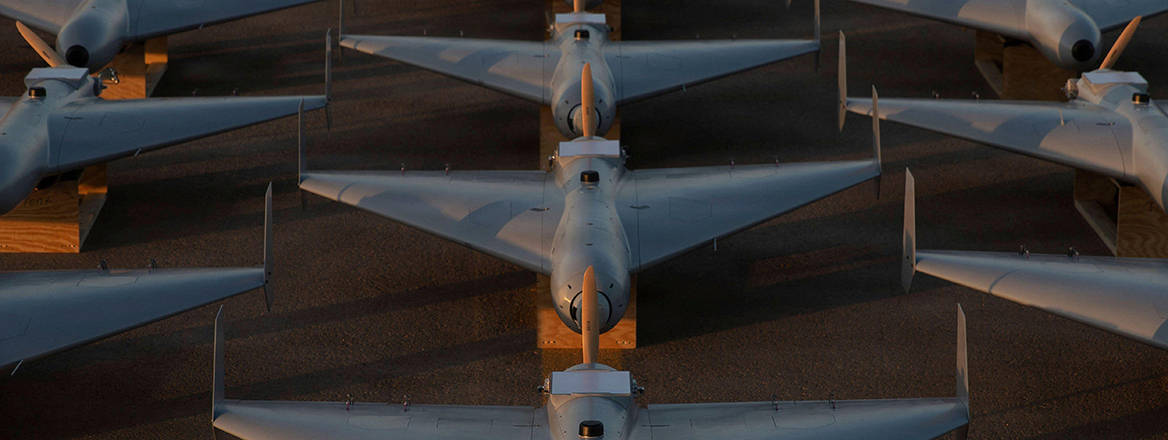
The Iran war, beginning 28 February 2026 – Israel’s Roaring Lion, the US Epic Fury and Iran’s Operation True Promise IV – is the first major inter-state war in which both sides have employed loitering munitions and drones since the start of hostilities. Therefore, it marks a significant turning point in contemporary warfare.
From the war’s inception, drones have formed the backbone of Israeli and US efforts against Iran, which are integral to Western forces’ precision strike capability. However, attention has instead tended towards the targets of precision strikes, particularly figures and facilities. Indeed, initial high value targets included senior Iranian leadership and ballistic missile sites, reflecting US-Israeli endeavours to decapitate the Iranian regime and constrain its stand-off strike capability.
Yet, loitering munitions – not drones – swiftly seized media and analytical attention; both as predator and much sought-after prey. Most vividly, infamous Shahed-136s with their distinctive silhouette, buzzing sound and vast numbers, which, according to leading datasets and analyses, far exceed Iranian missile launches (and other loitering munitions). Starkly set against world-famous skylines, loitering munitions have indelibly been seared into many a mind’s eye.
Click here for the full press release
Original article link: https://www.rusi.org/explore-our-research/publications/commentary/clear-warning-iran-war-and-loitering-munitions-threat
.jpg "Local government reorganisation (LGR)")


