RUSI
 Printable version Printable version
|
How Russia Turns Gamers into Fighters
The Kremlin’s weaponization of video games for recruitment and influence is no longer a theoretical risk. To protect the digital commons, the West must treat gaming as a core frontier of contemporary hybrid warfare.
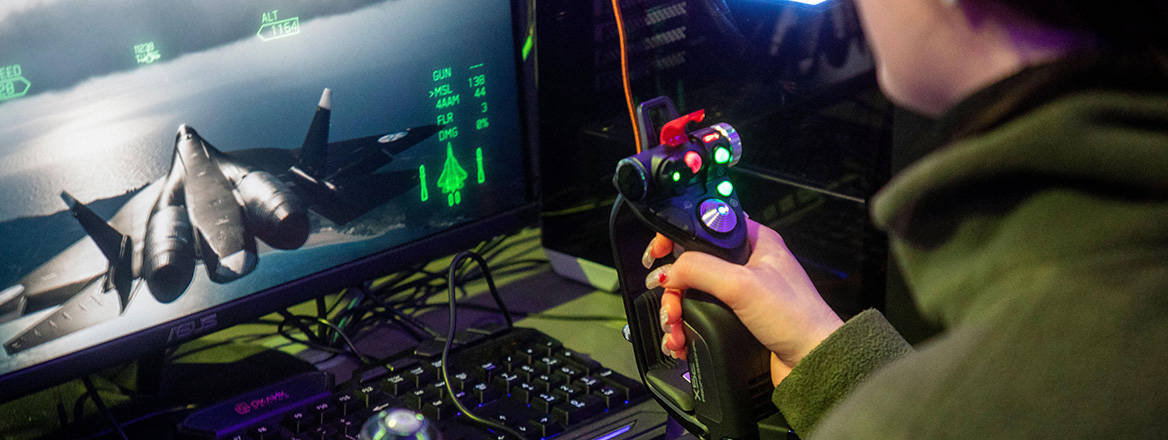
Russia’s active weaponization of video games has become ingrained in its doctrine of hybrid warfare, resulting in loss of lives across continents. Recent revelations from Bloomberg demonstrate how foreign nationals are recruited online via popular military-simulation (milsim) games and Discord chats to fight for Russia in Ukraine. These attempts fit neatly within broader influence operations and cognitive warfare tactics leveraging video games. From propaganda mods and in-game recruitment campaigns, to creating Russian-only sovereign gaming platforms, these tactics speak to the political and cultural reality of online games as contested information spaces. As previously assessed by RUSI, the immersive, interactive and transnational nature of modern gaming builds tight-knit social spaces with less moderation than conventional social media. Despite being perceived as apolitical, gaming ecosystems offer Moscow ample room to exercise hybrid tactics against audiences abroad. In effect, platforms designed for entertainment are converted into battlefields for influence and recruitment.
Recruitment from Gaming Spaces
In mid-2024, two young South African men fell victim to Russia’s gaming recruitment strategy. The pair, avid players of the milsim game Arma 3 and frequently present in related Discord servers, were approached by a recruiter using the handle ‘@Dash’. After weeks of conversation, this gaming recruiter arranged an in-person meeting in Cape Town, eventually a meeting at the Russian Consulate with officials. The pair were on a flight to St. Petersburg in July 2024, and by early September the gamers-turned-recruits had signed one-year contracts with the Russian military. Within weeks, however, one of the South Africans was killed in action in Ukraine. The episode has sparked a scandal in South Africa (where serving in a foreign army has been illegal since 1998) and exposed a clandestine pipeline for fighters recruited through gaming communities. South African political figures have also faced accusations of recruiting fighters for Russia.
What distinguishes recruitment in gaming from foreign legions or private military companies (PMCs) is its affordance of minimal state-level diplomatic fingerprints and greater plausible deniability.
Many elements of this case mirror those of terrorist radicalisation and recruitment; dynamics which have been extensively studied by the Extremism and Gaming Research Network and RUSI.
Click here for the full press release
Original article link: https://www.rusi.org/explore-our-research/publications/commentary/how-russia-turns-gamers-fighters