Met Office
 Printable version Printable version
|
Met Office supports BAE Systems Prismatic flight
Expert Met Office scientists and meteorologists have supported the successful flight of BAE Systems Prismatic’s PHASA-35 high altitude Uncrewed Air System.
The PHASA-35 platform is designed to provide a persistent, stable platform for monitoring, surveillance, disaster relief and communications such as providing 5G. It is ultra-light weight, weighing just 150kg, and has the same wingspan as a Boeing 737.
Using solar panels along its 35m wingspan, the aircraft is designed to stay in the air for months at a time at altitudes of 50-65,000 feet.
With such a lightweight airframe, forecasting the right conditions for launch, climb, cruise and landing is crucially important. Met Office experts have provided forecast model data and scientific analysis to provide the best possible information and support all the way through to the top of the atmosphere.
The Met Office team have also provided a visualisation capability, working alongside partners IBL so weather information can be fully integrated into the BAE Systems Prismatic mission planning process. The Met Office College will also be providing an aviation meteorology training package for the PHASA-35 team.
Once the aircraft enters the stratosphere and at its cruising altitude, it is no longer subject to the normal weather we experience within Earth’s lower atmosphere. But that doesn’t mean the end of Met Office support. There is a delicate balance between flight optimisation, avoiding the weather within the troposphere and remaining in the stratosphere which can vary in height. Met Office meteorologists and forecast tools were able to provide detailed insights into where this boundary was to enhance efficiency and mission success.
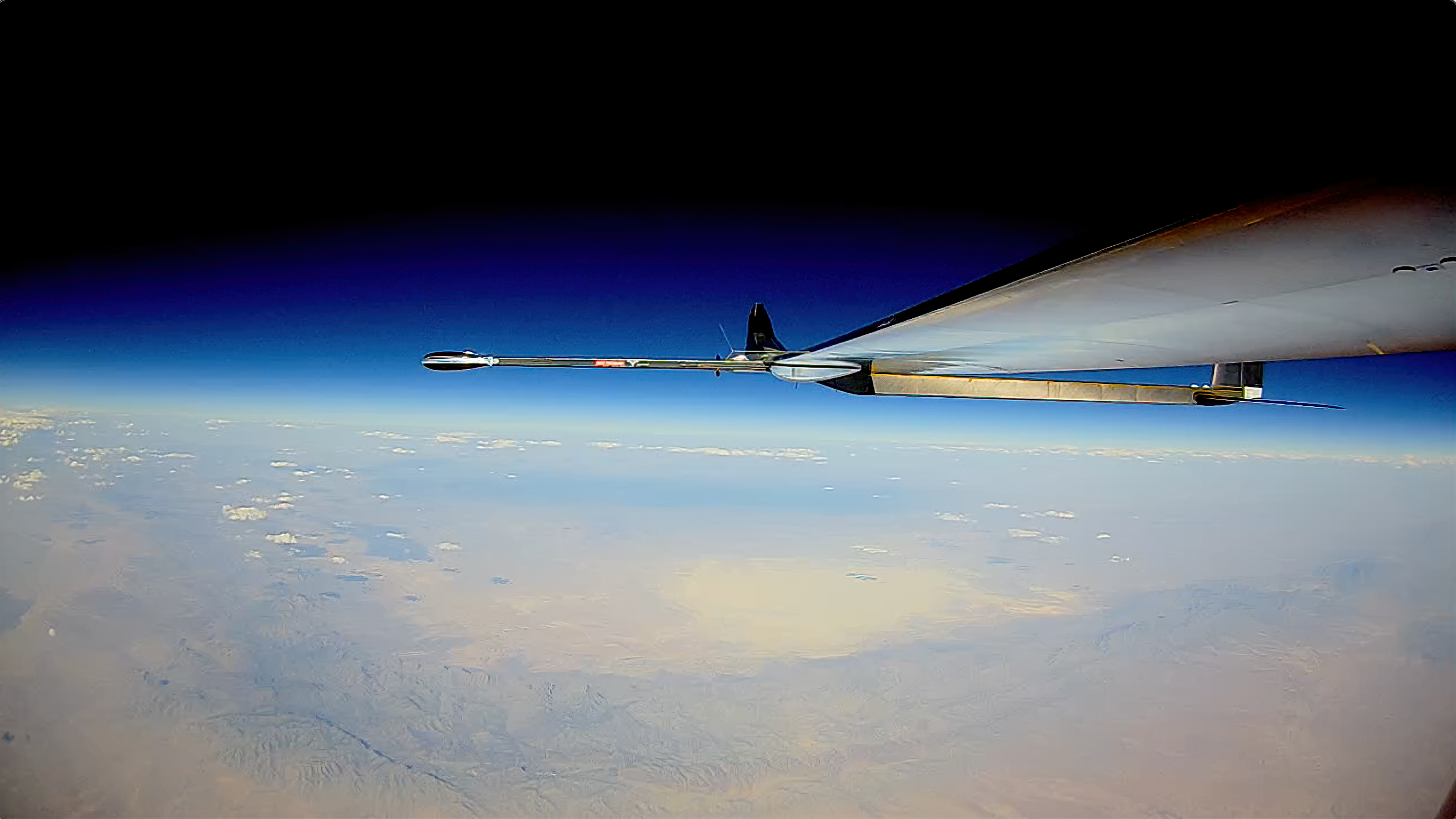
Image: BAE Systems Prismatic.
Click here for the full press release
Original article link: https://www.metoffice.gov.uk/about-us/press-office/news/weather-and-climate/2023/met-office-supports-successful-bae-systems-prismatic-launch