RUSI
 Printable version Printable version
|
Starmer, Burnham and Foreign Aid: A Troubling Inheritance
The contraction of UK aid, and its knock-on implications for security, pose big questions and lessons for Starmer’s successor(s).
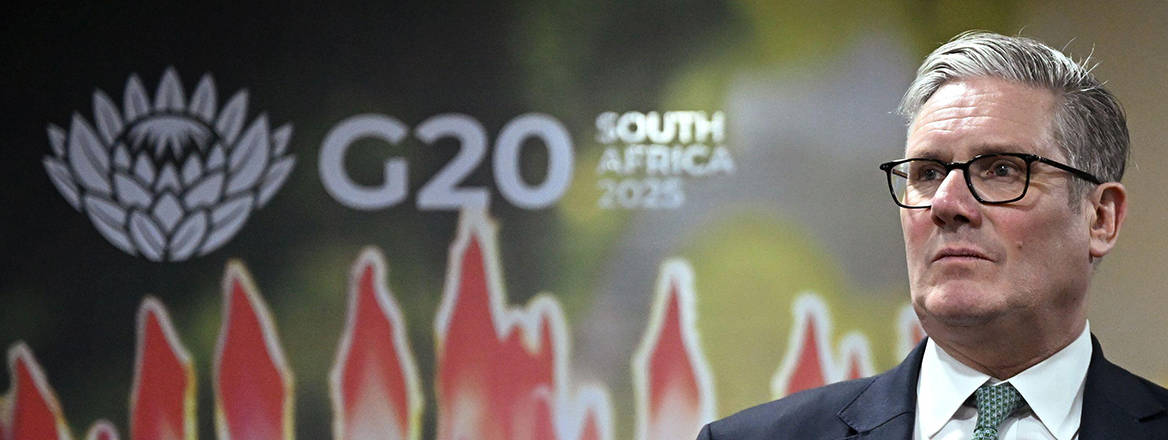
Sir Keir Starmer’s tenure coincided with a rough time for development work, as the gutting of USAID, and concurrent falls in global aid spending, marked an inflection point for humanitarians, diplomats and security practitioners alike.
While the full impact is still unfolding, cuts have already exacted a heavy toll on emergency relief, climate resilience, human rights and social welfare. Programmes lack liquidity, civic networks are contracting, and there is mounting fear over the loss of trust, talent, expertise and institutional memory. Sudan, host of the world’s largest hunger crisis, saw 1,100 street kitchens shut amid cash-shortages. In Ethiopia, support for rape victims was suddenly suspended. Surges in conflict, riots and protests were documented across numerous Sub-Saharan states; in South Sudanese villages, subcounty chiefs or ‘payam administrators’ recorded a tenfold increase in local mortality rates. On the international level, entities structuring much of aid’s delivery – IOM, WHO, OCHA, WFP, UNHCR and UNDP – are all experiencing existential strain. In short, austerity has distorted development’s entire ecology, with estimates suggesting a possible 750,000 fatalities within the first year of US cuts alone. Projections model anywhere between 9 million to 22 million deaths by 2030.
Of course, these issues must be understood in the context of long running trends and systemic changes. Peace and security programming has dropped precipitously since 2019, hampered by fiscal bottlenecks, while the aggregate share of ODA allocated to technical assistance – essential for revenue generation and sustainable service provision – halved between 2016 and 2025. Analogous trends are evident in resourcing for fragile states, despite a profusion of armed conflict trapping almost 20% of children in warzones.
At the same time, donor markets are increasingly congested, fragmented and (explicitly) transactional, with China, Russia and a variety of ‘Middle Powers’ ‘slicing, dicing and trading’ sovereignty to secure concessions and strategic clout. The corollaries may include the occasional commercial boon, but also co-optation, graft or, as in Sudan, state collapse.
Nor should Labour policies be isolated from the shared ramp-up in defence spending across Europe; a volatile White House; or past skrimping by earlier governments – reductions that have left FCDO forward-planning ‘all but impossible’ since 2020.
For all the talk about systemic solutions, the UK appears more preoccupied with palliative needs than long-running structural change
But even with this considerable prefacing, the scale of UK cuts announced last year – stripping aid back from 0.5% to 0.3% of GNI by 2027 – sparked serious concerns, not least because almost a fifth of the rump budget covered Home Office asylum costs. Numerous experts have criticised the decision, branding the reductions detrimental to development goals and ‘dangerously counterproductive’ to Britain’s own security, standing and supply chains. Further disclosures released as Parliament rose for summer recess did little to bolster confidence, with Sarah Champion, Chair of the International Development Committee (IDC) casting the UK’s ‘brutal’ drop in bilateral assistance as ‘chilling’.
Click here for the full press release
Original article link: https://www.rusi.org/explore-our-research/publications/commentary/starmer-burnham-and-foreign-aid-troubling-inheritance