National Archives
 Printable version Printable version
|
The A–Z of the Royal Navy Captains' letters project – 'N' to 'Z'
Bruno Pappalardo reports on the final findings of the volunteer Royal Navy Captains’ letters project: Including King George III's merry trip, the Rosetta Stone's arrival, and the quality of London water.
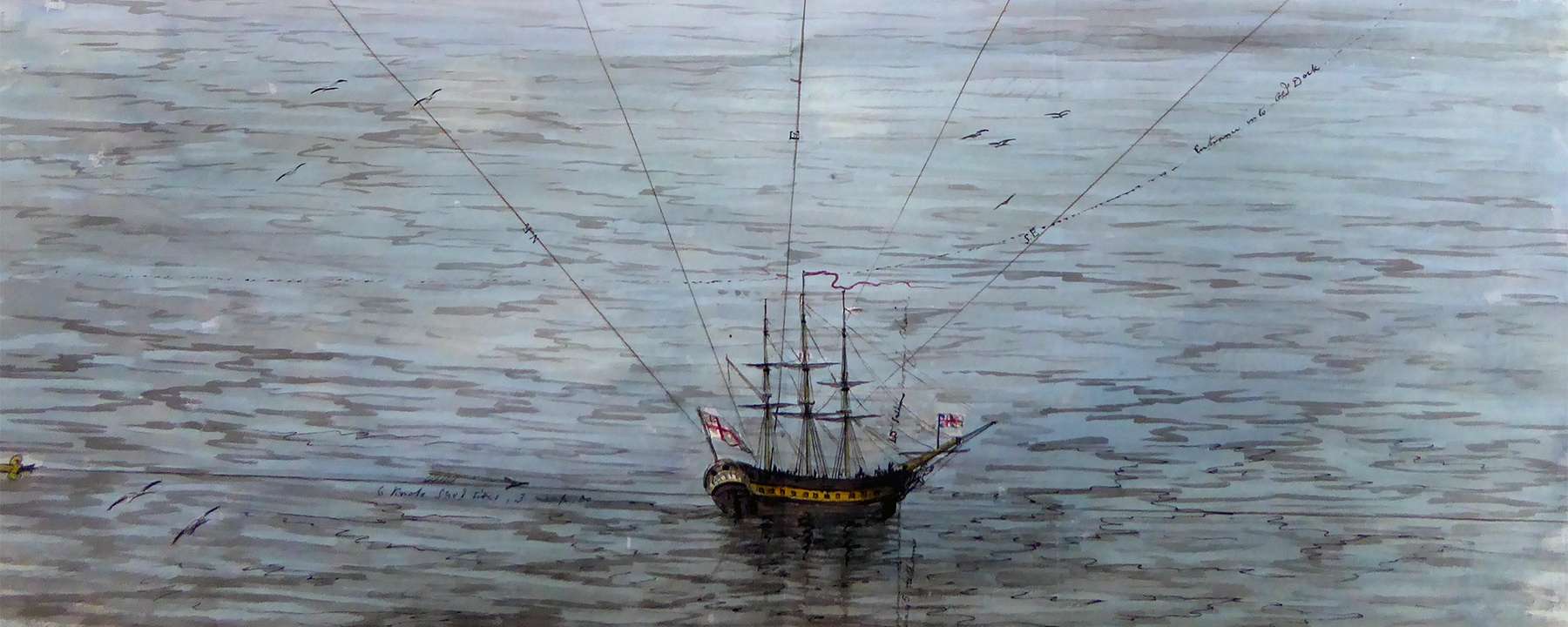
This project, through the efforts of a dedicated team of volunteers, has catalogued 564 boxes of Royal Navy Captains’ letters of the French Revolutionary and Napoleonic Wars (1793–1815). This has made their content searchable on The National Archives' catalogue, Discovery. They are found within the ADM 1 series for the dates 1793 to 1815.
The last phase of work for Captains whose surnames begin with the letters N to Z, amounting to 35,205 letters across 225 boxes, is now complete. This brings the total to 101,928 letters and over 10,000 enclosures. None of this would have been possible without a team of volunteers who have selflessly striven to produce work of lasting value to researchers.
You can now search across these records on Discovery by a ship, captain or place name, and see details of all letters relevant to their search terms. In this final blog, I'll highlight some of the fascinating stories we've discovered during this final phase.
The merry king
In these letters can be found 114 authored by Sir Harry Burrard Neale, (1765–1840). In a distinguished career Neale served as member of Parliament for Lymington, Hampshire, as a Lord of the Admiralty from 1804 to 1807, and as the Mediterranean Commander in Chief in 1823. One of his most prestigious appointments, in May 1801, was to command the Royal Yacht, Royal Charlotte, bringing him into direct contact with the Royal family.
Having been tasked with transporting the family from Lymington to Weymouth, Neale states in a letter (catalogue reference: ADM 1/2227/85) from Weymouth on 9 July 1801 that there had been bad weather since their arrival. He notes that the Queen and some of the Princesses were sick on their passage. He also writes that King George III, who had previously experienced several episodes of mental health difficulties, most notably in 1788–1789, ‘seemed the happiest man alive and was really enjoying himself’.
Click here for the full press release
Original article link: https://www.nationalarchives.gov.uk/explore-the-collection/the-collection-blog/the-az-of-the-royal-navy-captains-letters-project-n-to-z/