Breakthrough
 Printable version Printable version
|
What Your Boss Sees When You Submit AI-Generated Work
Learn how to use AI intelligently without damaging trust or credibility.
Before you submit that AI-generated report, that ChatGPT-drafted email, or that Claude-written analysis to your boss, understand this: they can tell. Maybe not every time, but often enough. And what they see isn’t just “this person used AI.” It’s something far more damaging: “this person doesn’t know enough to evaluate what they’re submitting.”

That’s the real problem. And it starts long before you hit send. It starts with the question you never asked yourself before typing that prompt.
Do you know enough before you prompt?
Your boss didn’t get to where they are by accepting information at face value. They’ve developed pattern recognition. They know what thorough research and good analysis looks like. They know the difference between someone who understands their work and someone who has outsourced their thinking.
AI has removed the natural friction that used to exist between not knowing something and getting an answer. You used to need some foundational understanding just to ask a decent question. That baseline knowledge meant you could sense when an answer was incomplete, inaccurate, or missing crucial context.
Now? You can ask anything without understanding anything. “Write a competitive analysis.” “Explain our Q3 performance drop.” “Draft a strategy for entering the European market.” You don’t need domain knowledge. You don’t need to understand what makes a good answer. You just prompt and paste.
And your boss notices.
Not because the writing style is off (though sometimes it is). Not because there are factual errors (though sometimes there are). They notice because the work lacks the judgment that comes from actually wrestling with a problem. It’s smooth but superficial. Comprehensive but generic. It answers the question you asked without addressing the question you should have asked.
Consider these two scenarios:
Scenario A: You prompt ChatGPT with “Explain why our customer retention dropped last quarter” and submit whatever comes back.
Scenario B: You think first: “Retention dropped from 94% to 87%. That’s outside normal variance. Renewal rates are stable, so it’s not pricing. It coincided with the platform migration. I need to understand if technical issues drove cancellations, and specifically which user segments were affected most.”
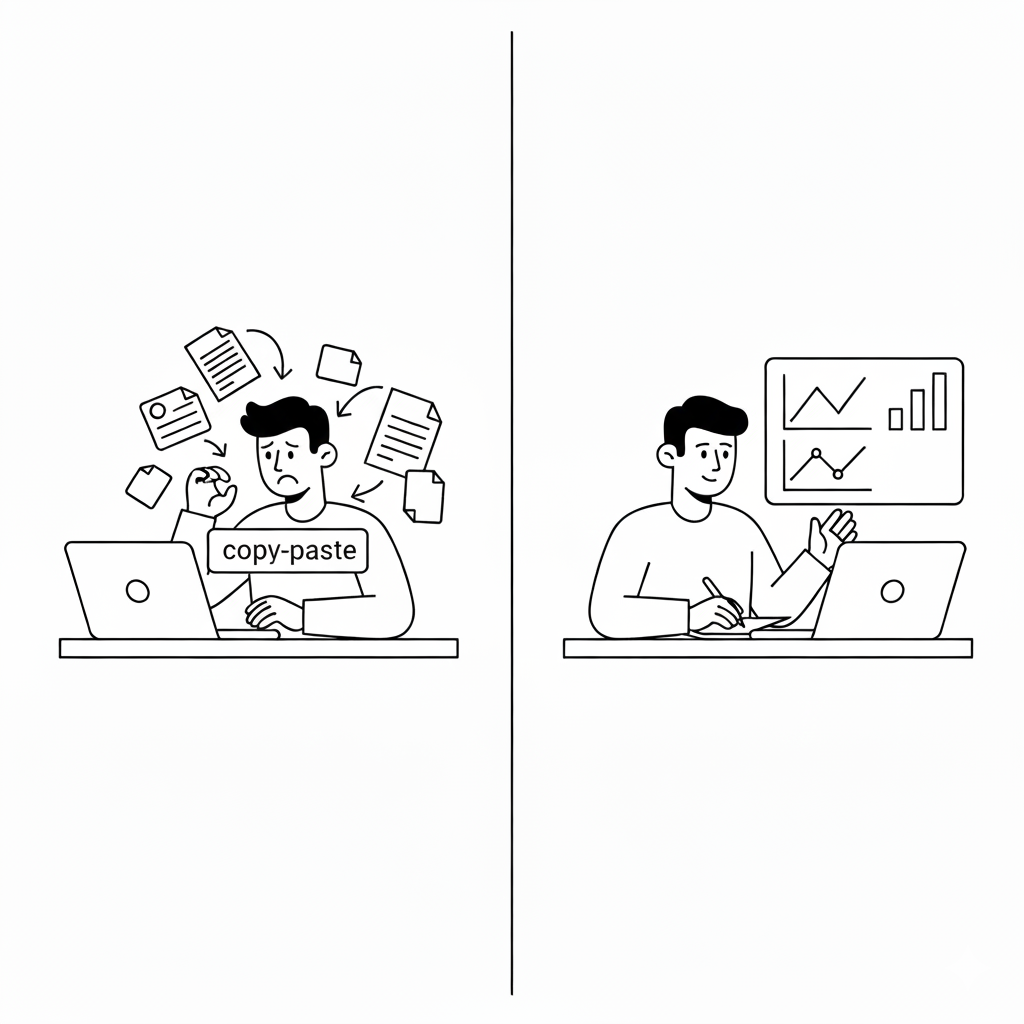
Then you prompt AI to help you analyse the migration timeline against cancellation patterns.
Your boss can tell the difference. Scenario A produces a list of generic possibilities. Scenario B produces targeted insight because you knew enough to ask the right question.
Do you have a pre-prompt checklist?
Most of you may have answered no. Let’s turn that into a yes!
The next time you want to ask the AI platform anything, it is best to ask these three questions to yourself before you prompt. These aren’t just about getting better AI outputs. They’re about demonstrating critical thinking, a human skill that makes your analysis stand out.
1. What do I already know about this?
This activates your professional judgment. Even limited knowledge helps you spot when AI has gone off track or missed something crucial.
Your boss assigned you this work because you have context they don’t. You know the client’s history. You understand the team dynamics. You’ve seen how similar initiatives played out before. When you skip this step and go straight to AI, you’re throwing away your actual value.
Real example: A marketing manager asks AI for campaign ideas without first noting that their audience is price-sensitive, the brand voice is conversational not corporate, and video content has consistently underperformed for them. The AI suggests a premium-positioned video campaign. The manager submits it. The boss immediately knows this person hasn’t engaged their brain.
2. What specific gap am I trying to fill?
Vague questions to AI produce vague answers that look like you don’t really understand what you’re doing. Your boss spots this instantly.
Instead of “Help me analyse team performance,” you should know: “I need to understand why our sprint completion rate dropped 15% despite stable team size and similar story point allocation. What metrics should I examine to identify whether this is an estimation problem, a capacity problem, or a process problem?”
That’s the question of someone who understands their domain. The AI’s response to that prompt will be exponentially more useful and exponentially more credible when you present it.
3. How will I verify this answer?
This is the question that separates people who use AI as a tool from people who’ve become dependent on it. If you can’t verify the output, you shouldn’t be submitting it.
Your boss isn’t asking “Did you use AI?” They’re asking “Do you trust this enough to stake your professional credibility on it?” If you don’t have a verification plan, the answer should be no.
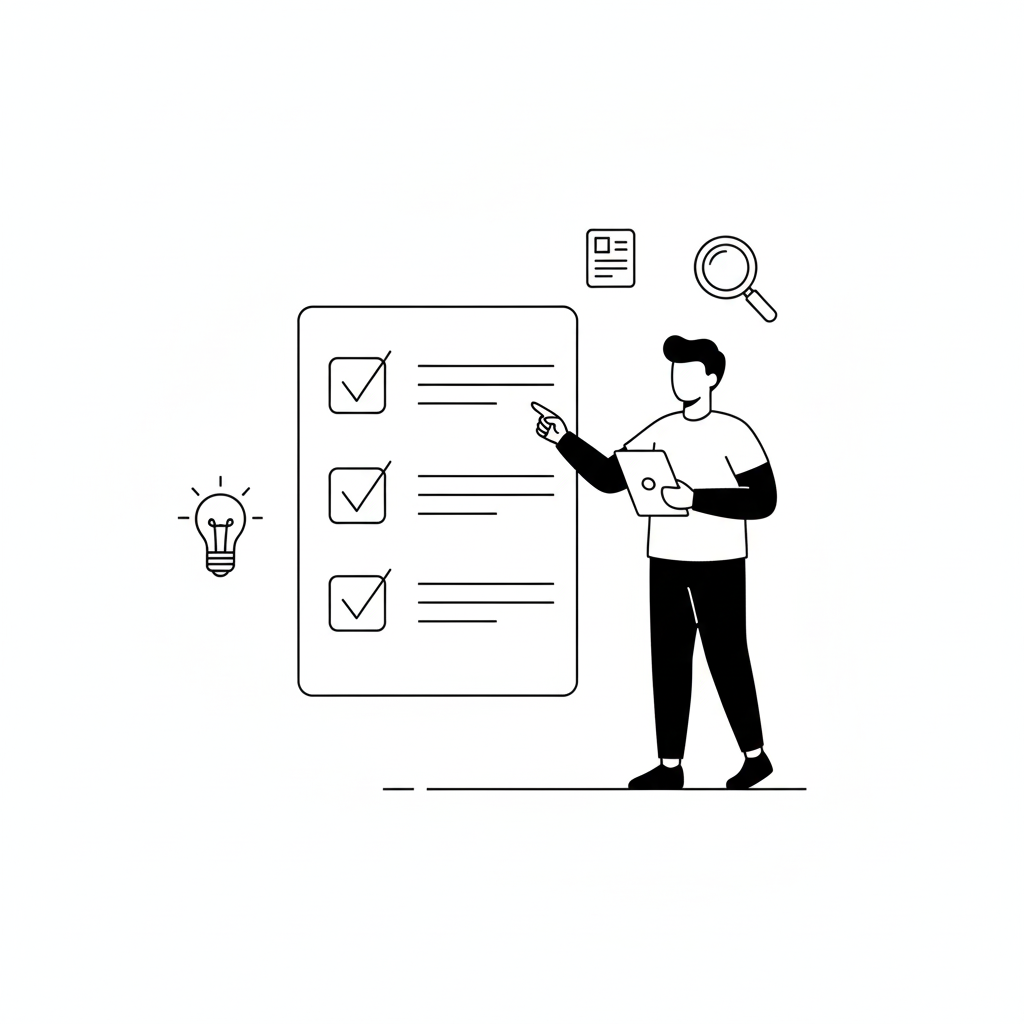
Let’s see what this looks like in practice:
For the marketing professional:
- What I know: Brand guidelines, audience demographics, past campaign performance, current market positioning
- Specific gap: Need fresh creative angles that align with our sustainability messaging for Q2
- Verification: Cross-reference with creative team, check competitor landscape, test concepts with customer advisory board
For the developer:
- What I know: The function worked pre-refactor, returns undefined now, no error thrown, similar functions work fine
- Specific gap: Can’t identify where the return logic broke
- Verification: Test the fix, run unit tests, check for similar patterns elsewhere, code review with senior dev
For the manager:
- What I know: Q3 targets all met, Q4 all missed, no staffing changes, similar project complexity
- Specific gap: What variable changed between quarters that explains the performance drop
- Verification: Compare against 1-on-1 feedback, review sprint retrospectives, check if deadline assumptions were realistic
What value are you adding? (Your boss is looking for that)
Here’s what your boss sees when you submit work that’s clearly just AI output with minimal thinking:
They see: Someone who can operate a tool
They value: Someone who knows when and how to use that tool
They see: Generic competence
They value: Specific expertise applied with judgment
They see: Fast output
They value: Reliable insight
The difference between “AI, solve this for me” and “AI, help me think through this” is the difference between being replaceable and being indispensable.

One approach treats AI as a substitute for your expertise. The other uses it to amplify your expertise. Your boss can absolutely tell which approach you’re taking.
Because here’s what they’re really evaluating: Can this person be trusted with complex decisions? Do they understand our business well enough to spot when something doesn’t add up? Will they catch errors before they become problems? Or are they just a conduit for whatever AI spits out?
The professional who treats AI as a thinking partner is the one who asks better questions, evaluates answers critically, and adds their own judgment and context. This is the person who gets promoted during appraisal season. That’s who gets pulled into strategic conversations. That’s who becomes irreplaceable.
The person who just prompts and pastes? They’re training their boss to see them as someone whose job could be done by anyone with an AI subscription.
Your boss isn’t anti-AI. They’re anti-thoughtlessness. They can tell when you’ve used AI to enhance your thinking versus when you’ve used it to avoid thinking altogether.
The next time you’re about to submit AI-generated work, ask yourself the question nobody else is asking: “What am I hoping to understand, and do I know enough to evaluate this answer?”
Because your boss is already asking it about you. And your career trajectory depends on what they conclude.
What Your Boss Sees When You Submit AI-Generated Work was originally published in Breakthrough Social Enterprise on Medium, where people are continuing the conversation by highlighting and responding to this story.
Original article link: https://wearebreakthrough.co.uk/what-your-boss-sees-when-you-submit-ai-generated-work/