RUSI
 Printable version |
Beyond the Menu – Pragmatism over Purity in UK–EU Relations
At the UK–EU Summit on 20 November, both sides should drop Brexit-era red lines and fixed institutional models in favour of pragmatic cooperation built on shared interests.
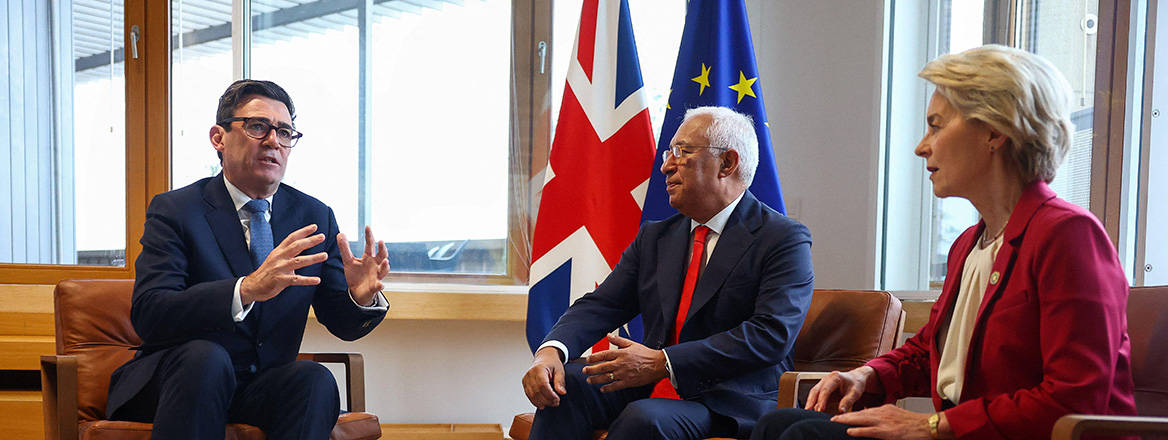
In the months preceding the UK–EU Summit on 20 November, the old guard on both sides of the Channel emerged to offer their opinions on the future relationship. Chief among these were two men present at the destruction: former EU Brexit negotiator Michel Barnier and former UK Prime Minister David Cameron. While Barnier warned that the UK must not be allowed to ‘cherry pick’ in seeking to rejoin the EU internal market, Cameron cautioned that any effort to rejoin the bloc would be ‘very long and painful’. For years, the EU has presented the UK the same trio of available institutional arrangements – namely a customs union, joining the single market or full membership – rather than entertaining any flexibility or deviations from this menu fixe.
While a purist, one-size-fits-all approach was feasible in a relatively benign security environment underpinned by US security guarantees, it is ill-suited to today’s more volatile, less predictable geopolitical environment in which the US is reducing its contributions to transatlantic security. To increase its leverage and influence globally, the EU needs to join forces with willing, capable and like-minded countries. This means shedding the shared trauma of Brexit and adopting a more flexible approach to the future relationship with the UK, with its £3 trillion economy and significant defence assets. Public opinion supports this direction of travel. A June 2026 European Council on Foreign Relations poll revealed that three-quarters of Britons support a closer relationship with the EU while EU voters are also positively inclined toward a closer relationship with the UK.
Mutual recognition may be a better path than full alignment, with the EU even choosing to adopt elements of the UK regulatory approach, and vice versa, as best practices emerge. Differentiation is already accepted practice within the EU
As UK Prime Minister Andy Burnham and his EU counterparts advance the UK–EU relationship at Summit on 20 November, the politicians and civil servants steering the process would do well to adhere to several guiding principles to gain momentum and maintain public support for even more ambitious cooperation in future.
Click here for the full press release
Original article link: https://www.rusi.org/explore-our-research/publications/commentary/beyond-menu-pragmatism-over-purity-uk-eu-relations