RUSI
 Printable version Printable version
|
Europe Needs to Update its North Korea Policy
Despite growing awareness of North Korea’s asymmetric capabilities and its strategic alignment with authoritarian powers like Russia, the EU’s policy remains outdated and fails to reflect the growing threat.
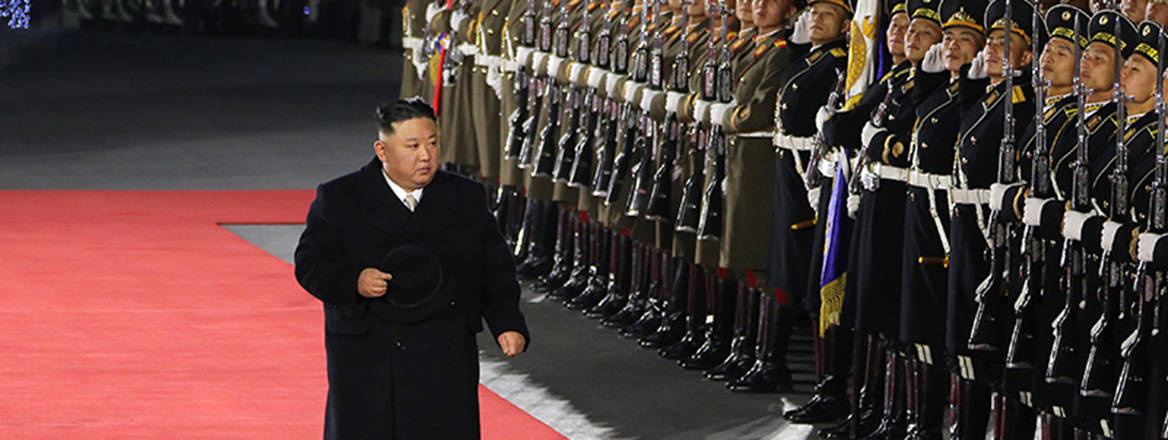
Europe’s approach to North Korea has stagnated into strategic irrelevance. Initiated with optimism in the early 2000s, the EU’s policy of ‘critical engagement’ aimed to reduce tensions, uphold non-proliferation norms, and promote human rights. While the essence of critical engagement remains sound in principle, the policy in its current form is outdated and fails to reflect the developments North Korea has undergone over the past two decades. There is a pressing need for a Critical Engagement 2.0 – an updated strategy that takes into account North Korea’s evolving threat posture and its integration into authoritarian networks.
Europe’s Approach to North Korea: From Early Engagement to a Peripheral Status
The European Union's (EU) policy toward North Korea is underdeveloped and increasingly disconnected from current realities. This is especially striking when contrasted with the optimistic beginnings of the relationship in the early 1990s. Following the adoption of its first Asia strategy in 1994, the EU pledged to raise its profile in the region, including through active engagement with North Korea. This period saw the establishment of trade relations, humanitarian aid programs, and political and human rights dialogues.
Formal diplomatic ties were established in 2001, and the EU consolidated its approach with the publication of a DPRK Country Strategy Paper for 2001–2004, prioritizing humanitarian aid and sustainable development. The EU was also drawn into security issues on the Korean Peninsula, joining the Korean Peninsula Energy Development Organisation (KEDO) in 1997. EU engagement was bolstered by South Korea’s Sunshine Policy and optimism stemming from the US–DPRK Agreed Framework.
However, this early momentum soon faded. Relations began to deteriorate in 2003 after the EU sponsored a UN Human Rights Commission resolution criticizing North Korea, prompting Pyongyang to suspend its human rights dialogue. The same year, the EU adopted the European Security Strategy, framing proliferation as ‘potentially the greatest threat to EU security’ and aligning European policy more closely with that of the US, particularly on sanctions. As North Korea’s nuclear ambitions escalated, culminating in its first nuclear test in 2006, EU policy hardened into what became known as ‘critical engagement.’ This approach sought to reduce tensions on the Korean Peninsula, uphold the non-proliferation regime, and promote human rights.
Yet in practice, EU engagement steadily eroded. The collapse of KEDO in 2006, and the EU’s exclusion from the subsequent Six-Party Talks, marked the beginning of Europe’s gradual disengagement. By 2015, political dialogue had ceased altogether, and in recent years, EU involvement has been largely limited to scaled-back humanitarian assistance. Over three decades, Europe’s relationship with North Korea has shifted from promising economic, diplomatic, and humanitarian engagement to near-total irrelevance.
North Korea remains a peripheral concern in Europe’s overall security calculus and rarely accompanied by concrete policy proposals
To be sure, North Korea does feature intermittently in key European strategic documents, such as the 2003 European Security Strategy, the 2016 EU Global Strategy, NATO’s 2022 Strategic Concept, and the UK’s 2023 Integrated Review Refresh, where it is consistently framed as a nuclear and proliferation threat. More recent documents reflect a growing awareness of North Korea’s asymmetric capabilities – particularly in cyber, intelligence, and disinformation – and its strategic alignment with authoritarian powers like Russia. Yet despite these developments, North Korea remains a peripheral concern in Europe’s overall security calculus, often bundled with other so-called ‘pariah states', and rarely accompanied by concrete policy proposals.
Click here for the full press release
Original article link: https://www.rusi.org/explore-our-research/publications/commentary/europe-needs-update-its-north-korea-policy