Met Office
 Printable version Printable version
|
How the refreshed Met Office app is taking shape
You may have noticed our weather app has changed a lot this year, with a new design and various updates since it went live in January. So, what has been the process behind the refreshed app, what has changed since launch, and what’s coming next?
Here, we explain how we approach major digital updates, why listening to users is central to the process, and how this shapes the Met Office app as it evolves.
Moving on from legacy software
Since its launch in 2016, the previous version of the Met Office app kept millions of people safe and informed about the weather, from preparing for storms to planning day-to-day activities.
However, the technology behind the app had become increasingly difficult and costly to maintain, and feedback frequently highlighted a dated design.
The legacy infrastructure limited how quickly changes could be made and made it harder to deliver improvements users had been asking for. For example, the previous setup effectively required separate development for iOS and Android, meaning updates were slower, more complex and less flexible.
Refreshing the app allowed us to move away from those constraints. By rebuilding on modern technology, we’ve created a platform that enables faster updates, clearer design, improved accessibility and the ability to respond more quickly to feedback – while continuing to deliver the same trusted weather information.
So how does that digital development process work in practice?
Developing and updating a popular digital product
As we looked to update an app with millions of users, we knew this would be a complex task, and needed to be led by users.
The best way of doing this was through working with people and iteratively implementing changes based on feedback.
This meant testing with users and launching with something that is referred to as a Minimum Viable Product. This included core functions, acted as a conduit for further feedback from real users and allowed improvements to be rolled out on a priority basis based on feedback. This approach ensures money and resources are spent wisely, working on the features users actually want and use.
For the Met Office app, this process of launching with a Minimum Viable Product involved the following stages:
- Extensive private and beta testing ahead of launch
- Iterative improvements based on this testing ahead of launch
- Gradually introducing the refreshed app in phases
- Collecting quantitative and qualitative feedback through user testing and reviews
- Prioritising changes based on what users told us mattered most
- Iterative and ongoing updates to the app in line with feedback
This approach to the refreshed app enabled us to adapt quickly, fix issues faster and avoid spending time and money developing features that our users didn’t want.
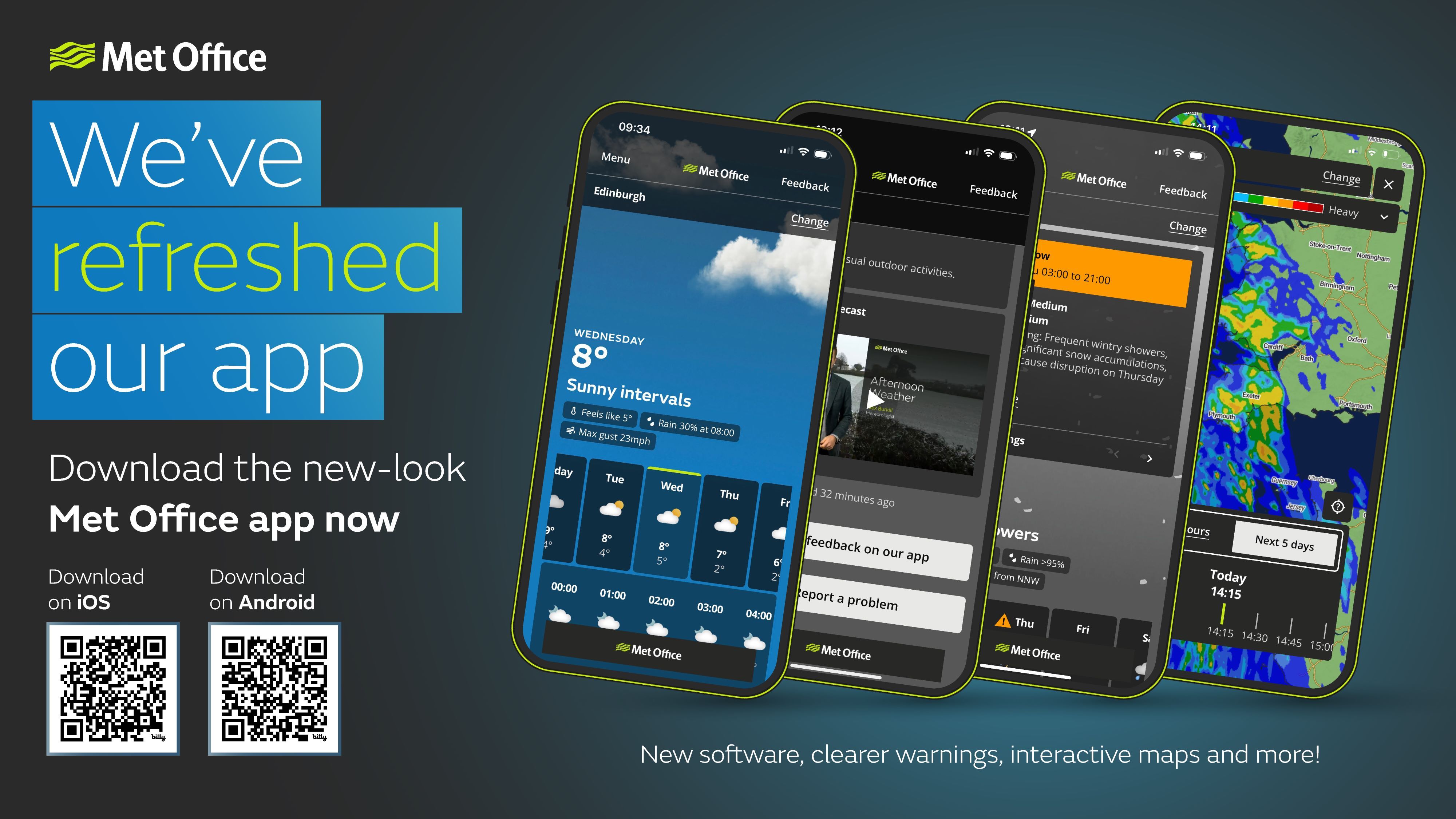
Progression with user feedback at the core
User feedback has shaped the app at every stage. Since launching in January, we’ve released frequent updates based on user feedback, gradually bringing new features, as well as the return of some old ones. These updates include:
- Improvements to performance and stability
- Accessibility improvements
- Refined design
- More accessible weather warnings
- Interactive maps for cloud, rain, temperature and weather warnings
- Daily and hourly forecast widgets for iOS and Android
- Pollen forecast information and notifications
- Beach forecasts including tide times, wave heights and safety information
This process is ongoing. The feedback continues to build our roadmap for future development and the launch of further features in the coming months to give users the information they need to make decisions around the weather.
What’s next for the Met Office app?
Continued engagement from users is vital to the future of the app. Feedback helps us prioritise what to work on next, test ideas before fully committing to them, and keep improving the experience over time. As a direct result of feedback, regional and long-range text forecasts are on the way in the coming weeks, with further improvements to location-based performance also coming soon.
While some recent work on the app has focused on strengthening core functionality and enhancing features, the foundations of the refreshed app allow us to move faster and explore more innovative improvements in the future. This will enable us to help more people make the most of the weather and stay safe during severe weather.
For ongoing updates about the Met Office app, you can track progress on new features and planned features. These plans are continually reviewed in line with the latest feedback given via the app.
About this blog
This is the official blog of the Met Office news team, intended to provide journalists and bloggers with the latest weather, climate science and business news, and information from the Met Office.
Original article link: https://www.metoffice.gov.uk/blog/2026/how-the-refreshed-met-office-app-is-taking-shape