RUSI
 Printable version Printable version
|
Iran War Grew UAE–Israel Security Ties: Normalisation’s Peril, Promise
The UAE has emerged as Israel’s most operationally significant Arab partner. But, for now, the relationship is no guarantee of wider regional integration.
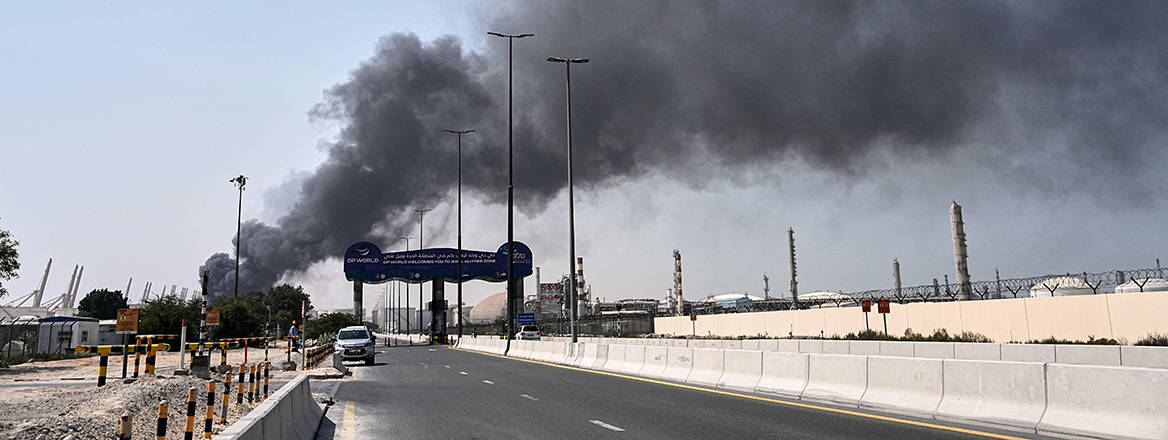
Last week’s revelation that Israel had moved advanced air defence assets and personnel to the United Arab Emirates during the war with Iran brought into the open a level of strategic cooperation both sides had previously kept more opaque. It was reported that Israel provided the UAE with an Iron Dome air defence system, as well as a surveillance system ‘Spectro’ and a version of the Iron Beam laser defence system, designed to intercept short-range rockets and drones. Iran targeted the UAE more than any other regional state, including Israel. Since the start of the war until the 8 April ceasefire, the UAE came under intense pressure, sustaining an estimated 550 ballistic missiles and 2,200 drone strikes, according to the Emirati defence ministry. This prompted the UAE to harden its stance against the Islamic Republic of Iran, extending farther than any other Gulf state in its criticism of Tehran’s retaliatory strategy.
On 4 May, an Israeli-operated Iron Dome system was reported to have intercepted an Iranian missile over the UAE, reportedly marking the first operational use of Israeli-manned hardware on Emirati soil and, during an active conflict, the first deployment of Iron Dome outside Israel or the US. Iran’s response the following evening was also telling: the spokesperson for Iran’s Khatam al-Anbiya Central Headquarters said that no such operations had been conducted, adding that any action would have been ‘clearly and officially announced’ and describing the accusations by the UAE Defence Ministry as ‘baseless.’
Israel–UAE security cooperation has developed steadily, building step by step over time since the 2020 Abrham Accords. The wider enabling context was Israel’s integration in January 2021 into US Central Command (CENTCOM) after being partUS European Command (EUCOM). The impact of this shift was substantial and facilitated the operational infrastructure for closer intelligence and coordination between Israel and the Gulf states.
The UAE-Israel alignment carries both clear and more opaque risks for both sides
Following Yemen-based Houthi attacks on the UAE in 2022, Israel reportedly transferred advanced air defence systems such as the Rafael Advanced Defense Systems-made SPYDER mobile interceptors and Barak systems to Abu Dhabi. These transfers were widely seen as among the first significant defence deals between Israel and a Gulf country after normalisation. Rather than replacing the UAE’s existing Western-provided systems, such as Patriot and THAAD, they were intended to strengthen a layered air defence architecture and reflected a deepening pattern of bilateral security cooperation. Seen this way, the latest step points to the continuation and increasing visibility of an already established pattern of security coordination.
Click here for the full press release
Original article link: https://www.rusi.org/explore-our-research/publications/commentary/iran-war-grew-uae-israel-security-ties-normalisations-peril-promise