.png "Executive AI Leadership Programme for the UK Public Sector")


Children’s Commissioner
 Printable version Printable version
|
The Big Future: Speaking to children in Norfolk
The first few years of my time as Children’s Commissioner were immediately post Covid. In many ways, I imagined that the response to the pandemic, and its impact on children, would be what defined my time as Commissioner.
It is so odd that it so clearly has, and yet in many ways this goes unacknowledged. We spend so much time talking about the realities of being a post-Covid generation, the impact on education and development, or on mental health, and yet it now plays a strangely small role in our nation’s discourse, even when it comes to children.
In these reflections on my visits for my survey The Big Future, I haven’t yet addressed Covid. But as I spoke to scouts on Cromer beach during my visit to Norfolk, it came up unprompted for the first time in a while.
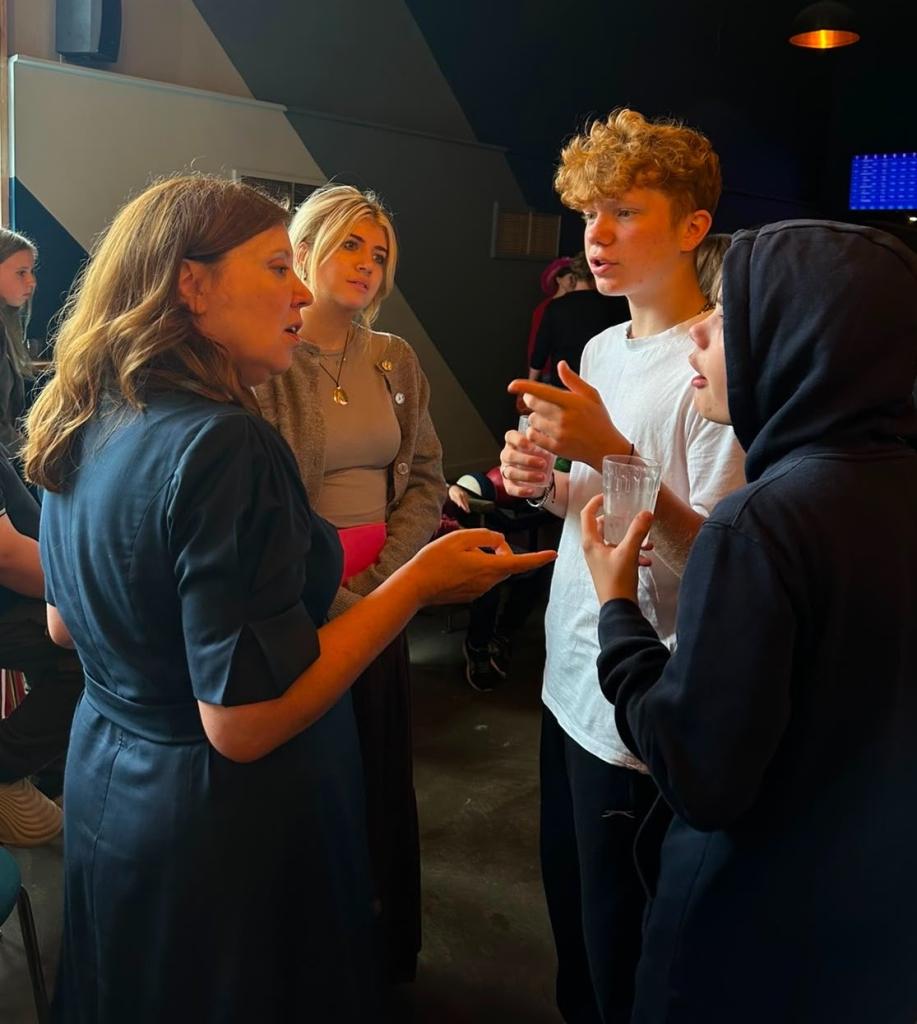
Speaking with young carers supported by the Carers Trust and Caring Together
“The start of Year 7 was a nightmare” one child told me. Another chimed in. “Yeah. I remember the first half of Year 7. It was very quiet, everyone just sat and did their work, and nobody spoke at break time either.”
The shadow Covid had cast was tangible. “I still struggle with crowds and busy environments” another child told me.
Looking at it from one perspective, their education had, in many ways, resumed. I don’t doubt they were learning during that time, furthering their knowledge base and understanding their subjects better. But there was so clearly something missing for them, too. Something quite fundamental, and all too human.
Education in this country has never just been about knowledge. From the very inception of state education post-war, we set out that the purpose of the state education system was to contribute to the spiritual, moral, mental and physical development of our children and as such our nation.
I have always considered this to be essential. It is something we cannot outsource or delegate, not if we are to do it properly. And as I saw those Scouts on Cromer beach, and listened to them talk about their struggles, I realised that the best medicine for their issues was simply ‘each other’.
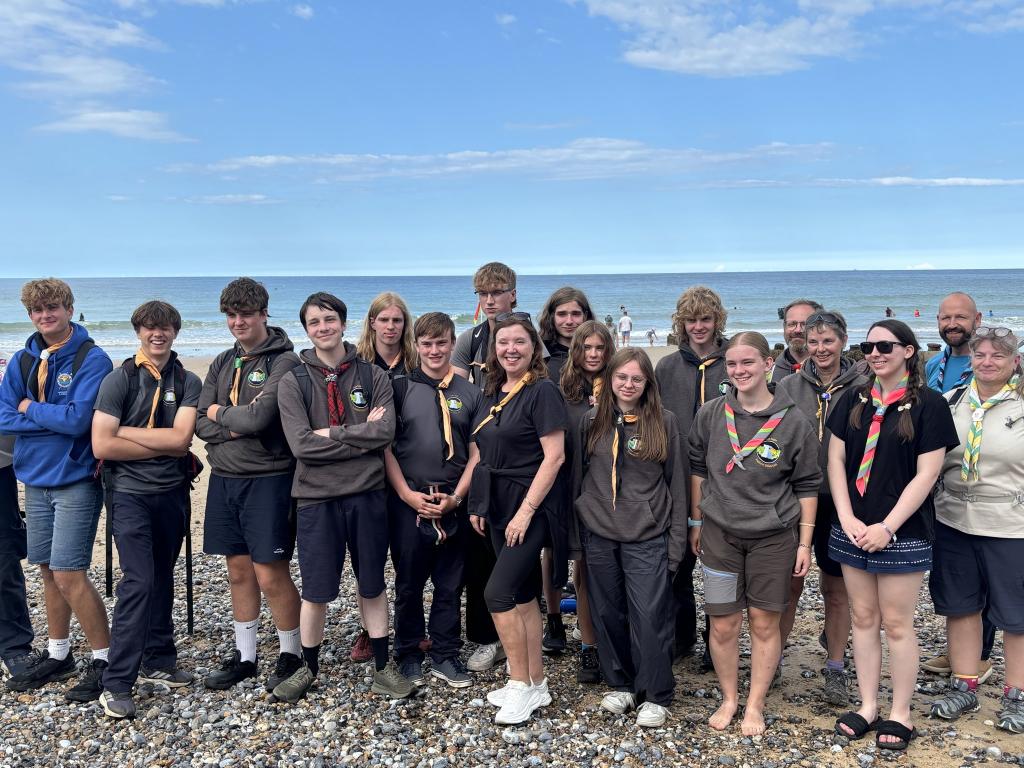
Speaking with Scouts at Cromer beach
Talking with the Scouts, it struck me how much of their post-Covid experience was about relearning the small, unspoken rules of being together: how to read a room, how to sit with a friend’s disappointment or anger, how to disagree, how to manage the difficulties of being social without disappearing into a screen instead.
It made me think again about what we ask of schools, and what the pandemic stripped out of education. We asked them to deliver a curriculum through a screen, and largely, they did. But the parts of school that happen in corridors, in changing rooms, on the walk to the bus stop, those were the parts nobody could replicate. I don’t think we have fully reckoned with what was lost there, or what it will take to rebuild it. But as a general principle, I think that there is a direction of travel we ought to pursue. Children have a right to learn, certainly, but I think in delivery of that, they have a right to other people.
Original article link: https://www.childrenscommissioner.gov.uk/news-and-blogs/the-big-future-speaking-to-children-in-norfolk/
.png "Executive AI Leadership Programme for the UK Public Sector")


